
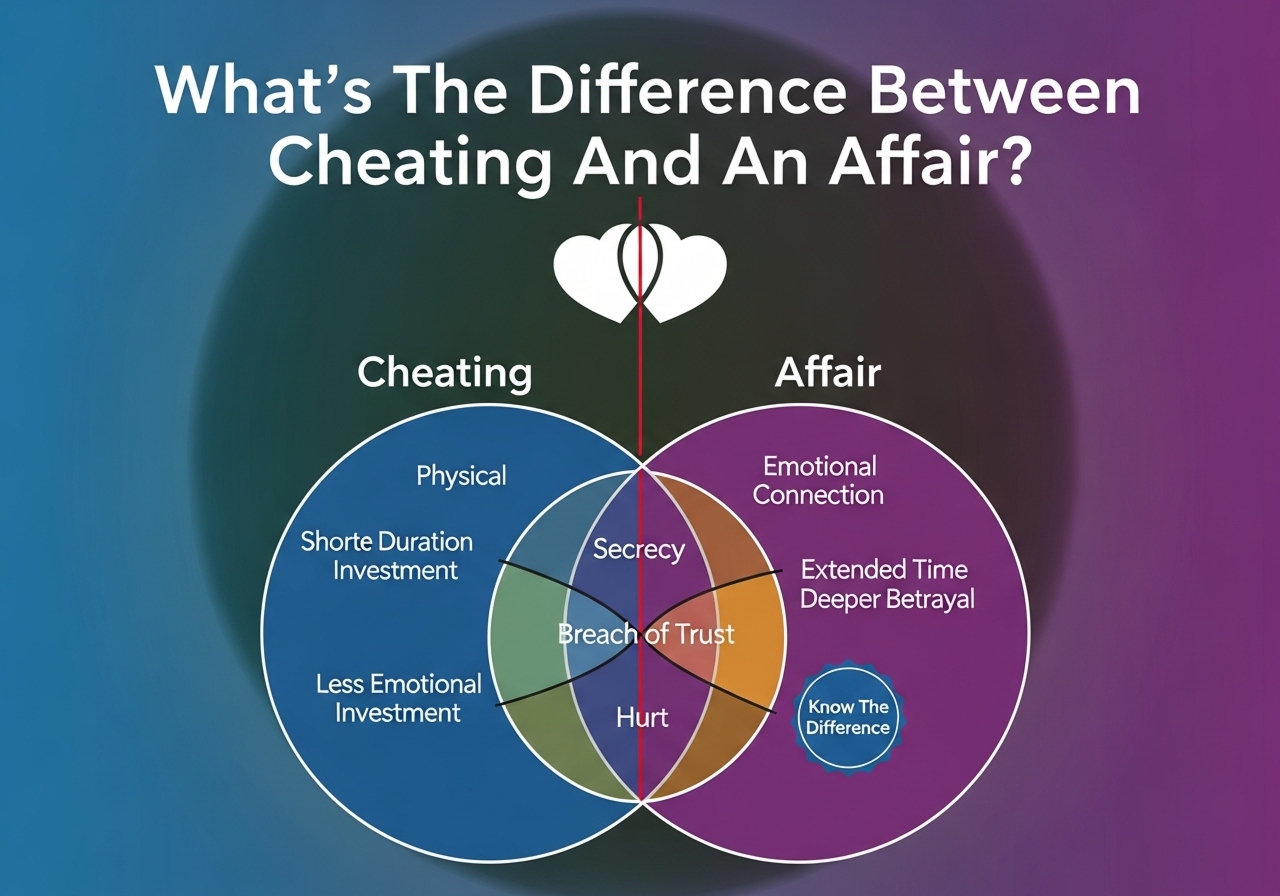
Have you ever wondered whether “cheating” and “an affair” mean the same thing, or whether there are important differences that change how you should respond?
What’s The Difference Between Cheating And An Affair?
This question matters because the words you use shape how you feel, how you communicate, and what steps you decide to take next. In many conversations people use the terms interchangeably, but there are differences in definition, intent, duration, emotional involvement, and the fallout they create. Understanding those differences gives you clearer context for your experience and helps you make better decisions about healing, communication, and future boundaries.
Why this distinction matters to you
How you label an experience affects how you interpret it, how you tell your story, and how others react when you disclose it. That label can influence legal decisions, therapy approaches, and whether you and your partner try to repair the relationship or move on. You deserve clarity and practical guidance when you’re navigating this painful territory.
Definitions: Cheating and Affair
What is “cheating”?
Cheating is often used as an umbrella term for breach of agreed-upon rules in a relationship. It usually denotes actions that violate trust and commitment, whether those actions are physical, sexual, emotional, or digital. Cheating can be a single incident or a pattern of behavior, and the severity often depends on the boundaries you and your partner set.
You should recognize that cheating is defined by your relationship agreements, not by external norms. What counts as cheating in one partnership may not in another.
What is “an affair”?
An affair typically implies a longer-term, ongoing involvement that includes emotional intimacy, secrecy, and repeated interactions outside the primary relationship. Affairs are usually characterized by sustained emotional investment and behaviors that mirror a secondary romantic partnership. They often involve deception, planning, and efforts to hide the relationship.
You can think of an affair as a specific type of cheating that usually has more depth and continuity.
Key differences summarized
Quick comparison in plain terms
A concise comparison helps you see how the two concepts diverge and overlap. The table below offers clear side-by-side characteristics.
| Characteristic | Cheating | Affair |
|---|---|---|
| Typical duration | Can be one-time or short-term | Usually ongoing and long-term |
| Emotional involvement | Sometimes minimal or absent | Typically significant emotional intimacy |
| Physical contact | Often includes physical/sexual behavior | Common, but not mandatory (emotional affairs exist) |
| Secrecy level | May be secretive but can also be impulsive | Highly secretive and planned |
| Impact on primary relationship | Varies from minor breach to major betrayal | Often more destructive due to depth and duration |
| Recovery complexity | May be simpler to address if isolated | Often more complex due to emotional entanglement |
| Legal/financial implications | May be limited | Can be substantial in marriage contexts |
This table is a guide, not a rulebook. Your situation may mix features from both columns.
Types and examples
Types of cheating you might encounter
Cheating takes many forms, and being able to name them helps you recognize what happened and how to respond. Common varieties include physical cheating, micro-cheating, digital cheating, and one-night stands.
You should evaluate each type based on your relationship’s explicit or implicit boundaries.
- Physical cheating: Sexual or romantic contact with another person.
- Micro-cheating: Small actions that signal romantic or sexual interest outside the relationship (e.g., flirtatious texting, secretive social media interactions).
- Digital/online cheating: Sexting, explicit messaging, or sexual interactions through apps and platforms.
- One-night stands: Single sexual encounter without further involvement, though they still violate trust.
Types of affairs explained
Affairs can be categorized by their dominant feature—emotional, sexual, or both. Recognizing the type can help you choose the right therapeutic or practical response.
- Emotional affair: Deep emotional intimacy with someone else, often accompanied by secrecy and a shift of emotional energy away from your primary partner.
- Physical/sexual affair: Repeated sexual encounters with a person outside the relationship.
- Romantic affair: A combination of emotional and physical intimacy that resembles a secondary relationship in many ways.
- Cyber affair: Emotional and sometimes sexual involvement primarily conducted online, but sustained and emotionally significant.
You should note that the boundaries between these types can blur; an emotional affair can evolve into a sexual affair, and vice versa.

Motivations: Why people cheat or have affairs
Common reasons behind cheating
People cheat or enter into affairs for a variety of reasons, and motivations often overlap. Understanding motives doesn’t excuse the behavior, but it helps you assess risk factors and patterns.
- Lack of emotional fulfillment: You or your partner may feel unseen, unheard, or emotionally disconnected.
- Sexual dissatisfaction: Unmet sexual needs or mismatched sexual desire can prompt seeking others.
- Opportunity and impulsivity: Situations with low risk of detection and high temptations can facilitate cheating.
- Low relationship satisfaction: Persistent unresolved conflict, boredom, or lack of commitment may be factors.
- Attachment and insecurity: People with insecure attachment styles may seek validation outside the relationship.
- Life transitions and stress: Major events can prompt people to seek comfort or affirmation elsewhere.
- Thrill-seeking: Some individuals are motivated by novelty, excitement, or risk.
You should consider your own context and emotional landscape to understand what led to the breach.
Why affairs often start and continue
Affairs typically begin when emotional needs are fulfilled outside the primary relationship. They continue because of escalating emotional investment, rationalization, and the difficulty of breaking an attachment that provides validation.
- Emotional bonding: The more you confide and receive support from someone else, the stronger the attachment.
- Escalation dynamics: Small transgressions can lead to larger ones over time, creating momentum that’s hard to stop.
- Secrecy reinforces connection: Hiding an affair can make it feel more intense due to cognitive dissonance and adrenaline.
- Avoidance of primary issues: People often maintain affairs instead of confronting problems at home.
You’ll find that motives are rarely simple; patterns, vulnerabilities, and opportunities all interact.
Emotional impact on you and your partner
Immediate emotional effects
When you discover cheating or an affair, your initial reactions may include shock, disbelief, rage, sadness, and numbness. These intense emotions are normal and part of the body’s threat response to betrayal.
You may experience physical symptoms like insomnia, appetite changes, anxiety, and panic attacks. Allowing yourself to feel without immediate judgment is important for long-term recovery.
Long-term psychological consequences
Long-term effects can include decreased self-esteem, post-traumatic stress symptoms, trust issues, and difficulty forming secure attachments in future relationships. For the person who engaged in the betrayal, guilt, shame, and identity confusion are common.
You should consider professional help if symptoms persist or interfere with daily functioning.
Signs and red flags to watch for
Behavioral warning signs
Recognizing early warning signs can help you intervene or seek clarity before patterns escalate.
- Secrecy with devices and accounts, sudden password changes.
- Emotional distance, withdrawal, or increased defensiveness.
- Excessive criticism of you or the relationship that shifts blame externally.
- Unexplained late nights, frequent “work” trips, or vague explanations for absences.
- New routines that exclude you or sudden changes in appearance or social behavior.
You should balance watchfulness with avoiding excessive surveillance that could itself harm the relationship.
Emotional red flags
Emotional red flags are less obvious but equally important.
- Your partner seeks emotional support primarily from someone else.
- They share personal problems, dreams, or romantic fantasies with another person but not with you.
- There’s an increase in secretive intimate conversations with a specific person.
- Emotional energy shifts away from the relationship—less investment in joint goals, rituals, or time together.
You can address these through open communication before they become entrenched.
How relationships are affected
Trust and intimacy erosion
Cheating and affairs both erode trust, but affairs—because of their length and depth—often cause more severe damage to intimacy. Rebuilding trust requires transparency, consistent behavior change, and time.
You’ll need to evaluate whether both partners are willing to do the necessary work for repair.
Communication breakdowns
After betrayal, conversations can become defensive, accusatory, or avoidant. Many couples fall into cycles of blame and retraumatization rather than productive problem-solving.
You should aim for structured, moderated communication, possibly with a therapist, to avoid re-traumatizing responses.
Change in relationship dynamics
Power shifts, role changes, and altered expectations often follow betrayal. You may find that decision-making, parenting duties, or emotional labor get renegotiated, sometimes unevenly.
You must negotiate these changes consciously, or they may create lingering resentment.

Legal and financial implications
If you’re married or in a civil partnership
In some jurisdictions, extramarital affairs can affect divorce settlements, custody decisions, and alimony. While many courts focus on financial and parental best interests rather than moral judgments, evidence of infidelity can influence outcomes in certain contexts.
You should consult legal counsel to understand how local laws might impact your situation.
Practical consequences beyond the emotional
Affairs can lead to shared assets being divided differently, changes in wills, or modifications to business relationships. If an affair becomes public, professional reputations might be damaged, leading to job loss or other material consequences.
You’ll benefit from documenting financial issues and protecting your interests if separation becomes likely.
Cultural and societal perspectives
How culture shapes definitions
Cultural norms influence what counts as cheating and whether affairs are stigmatized. In some societies, strict sexual norms make any extramarital contact a major scandal, while others are more permissive or pragmatic.
You should keep in mind that your cultural context affects your expectations, family reactions, and available support.
Gender and social expectations
Historically, responses to cheating and affairs have been gendered, with different standards applied to people. Modern shifts are challenging those double standards, but social judgments still vary widely.
You’ll see these influences also shape media narratives and personal reactions from friends and family.
Repair and recovery
Immediate steps you can take after discovery
Your initial actions set the tone for healing or escalation. Take steps that prioritize safety and emotional stabilization.
- Ensure immediate physical and emotional safety; remove yourself if you’re at risk.
- Pause major decisions until emotions stabilize—avoid impulsive actions like public confrontations or sudden moves.
- Seek support: trusted friends, a therapist, or a crisis counselor.
- Decide on immediate boundaries (e.g., communication limits, temporary separation) that feel protective.
You don’t have to decide everything at once; give yourself permission to take measured steps.
Steps for repairing the relationship
If you and your partner choose to attempt repair, there are concrete steps that increase the likelihood of genuine healing.
- Full disclosure: The betraying partner should be transparent about the extent of the betrayal within agreed limits.
- Accountability: The unfaithful partner must accept responsibility without minimizing or shifting blame.
- Apology and remorse: Genuine expressions of regret and empathy are crucial.
- Rebuilding trust: Consistent, predictable behavior over time is essential.
- Therapy: Individual and couples therapy help unpack motives, patterns, and relational skills.
You should establish a realistic timeline and check-in points to measure progress.
Healing as the betrayed partner
Recovering from betrayal is personal and non-linear. Respect your emotional needs and set limits for what you can tolerate.
- Allow yourself to grieve and feel anger without guilt.
- Practice self-care: sleep, nutrition, movement, and social support matter.
- Consider therapy or support groups specializing in infidelity.
- Decide what you need: time, transparency, evidence of change, or space.
You’re not obligated to forgive quickly; healing proceeds at your pace.
Healing as the unfaithful partner
If you’re the one who cheated, repair involves more than saying you’re sorry. You must demonstrate change and allow your partner to process the breach.
- Be prepared to stop contact with the third party and provide proof if required.
- Understand triggers that led to the behavior and address underlying issues.
- Practice radical honesty, even when it’s uncomfortable.
- Engage in individual therapy to change patterns that led to betrayal.
You’ll need to accept consequences and work consistently to rebuild trust.
When to separate or divorce
Signs that repair may not be possible
Not all betrayals can be repaired, and that’s a valid outcome. Some indicators suggest separation might be the healthiest path.
- Repeated patterns of cheating without meaningful change.
- Lack of remorse or ongoing denial from the unfaithful partner.
- Safety concerns, including emotional manipulation, abuse, or control.
- Incompatible goals: one partner wants the relationship while the other consistently seeks distance.
- Persistent secrecy or continuing contact with the third party despite agreements.
You should prioritize your well-being and consider legal advice if separation is under consideration.
When repair may be a realistic option
Some situations have higher potential for repair, especially when both partners commit to long-term work.
- The affair or cheating was a single episode with immediate accountability.
- Both partners are willing to engage in therapy and ongoing communication.
- There’s a mutual investment in shared life elements (children, finances, long history) and both partners can envision rebuilding trust.
- The betraying partner demonstrates consistent behavioral change.
You must evaluate whether trust can be rebuilt and whether both of you are ready to do the required work.
Prevention strategies: How to protect your relationship
Strengthen communication and agreements
Clear, regular communication about expectations, needs, and boundaries reduces ambiguity. Revisit agreements as your relationship evolves.
- Hold regular check-ins about emotional and sexual needs.
- Create explicit boundaries for social media, friendships, and contacts with exes.
- Normalize conversations about attraction and temptation without judgment.
You should treat agreements as living documents that adapt over time.
Build emotional and sexual intimacy
Investing in your relationship’s emotional and sexual life makes it less likely you’ll seek those needs elsewhere.
- Prioritize quality time, shared rituals, and curiosity about each other.
- Keep sexual communication open—talk about desires, fantasies, and frequency.
- Address boredom proactively by introducing novelty in healthy ways.
You’ll find that intentional investment yields long-term protective effects.
Individual responsibility and self-awareness
Both partners need self-awareness about vulnerabilities that increase risk.
- Monitor behaviors that signal drift from the partnership, such as emotional withdrawal.
- Get help for addiction issues, mental health conditions, or impulse-control problems.
- Seek therapy for insecure attachment patterns or chronic dissatisfaction.
You can reduce risk by tending to your own emotional health.
Practical tools for conversations after disclosure
How to ask questions that help rather than harm
When you confront or respond to disclosure, your questions shape whether the conversation is constructive.
- Ask clarifying, non-sensational questions: “Can you help me understand what happened and why?”
- Avoid interrogation-style questions that aim to punish rather than understand.
- Set limits on when and how you’ll discuss details—too much detail can retraumatize.
You should aim for information that supports decision-making and emotional processing.
Setting boundaries and agreements
After a disclosure, you’ll need clear boundaries to protect both partners and help rebuild trust.
- Decide on communication rules (frequency, content, and honesty requirements).
- Agree on transparency measures (access to shared calendars, open messages if chosen).
- Set safe-limits on interactions with the third party.
You can renegotiate these boundaries over time as trust is rebuilt.
Frequently asked questions (FAQs)
Is an emotional affair “as bad” as a physical affair?
Emotional affairs can be equally damaging because emotional intimacy often forms the foundation of partnership. Even without physical contact, sharing confidences, support, and romantic attention with someone else can deeply wound your partner. You should assess the degree of secrecy, emotional investment, and displacement of intimacy to determine severity.
Can a relationship fully recover after an affair?
Yes, many relationships recover and become stronger, but recovery requires time, consistent accountability, and often professional help. Transformation is possible when both partners commit to deep work and new relational patterns. You’ll know recovery is happening when trust slowly rebuilds and old triggers lose their power.
Should you tell your partner about a one-time mistake?
Honesty is often the healthiest route, but context matters. If disclosing causes more harm than good (for example, if it’s a fleeting, non-recurring temptation with no impact), some couples choose to handle it privately with therapeutic guidance. Consider the ethical and relational implications, and if in doubt, seek counseling for how to proceed.
Is sexting or online flirtation cheating?
Many people consider sexting or online flirtation cheating because it involves romantic or sexual communication with someone outside the relationship. If your partner would consider such behavior a violation of trust, treat it as cheating. You should align on digital boundaries.
Resources and next steps
When to seek professional help
If you or your partner experience persistent distress, trust issues that impair daily functioning, or recurring harmful patterns, professional help provides structure and safety for recovery.
- Individual therapy can help process trauma, shame, and attachment wounds.
- Couples therapy gives tools for rebuilding trust and repairing communication.
- Support groups offer shared experiences and validation.
You deserve compassionate, evidence-based support.
Books and tools you might find useful
There are several established books and workbook-style resources that can guide you. Consider materials on attachment theory, trauma-informed healing, and relationship repair. Many therapists also recommend structured exercises for transparency and rebuilding intimacy.
You should select resources aligned with your values and the unique needs of your relationship.
Final thoughts
Cheating and affairs overlap but are not always identical. Cheating is a broad term that captures breaches of agreed-upon relationship boundaries, while an affair typically signifies extended, emotionally invested involvement that functions as a secondary relationship. Your context, cultural background, and the explicit agreements you hold with your partner determine how you label and respond to these breaches.
You don’t have to carry this burden alone. Whether you decide to rebuild, separate, or pause and reflect, prioritize safety, truthful communication, and compassionate support. The path ahead may be difficult, but with clarity about what occurred and intentional steps forward, you can make choices that align with your well-being and long-term values.
If you want, you can tell me more about the situation in general terms (no graphic details), and I can help you think through next steps, resources, or ways to prepare for a difficult conversation.