
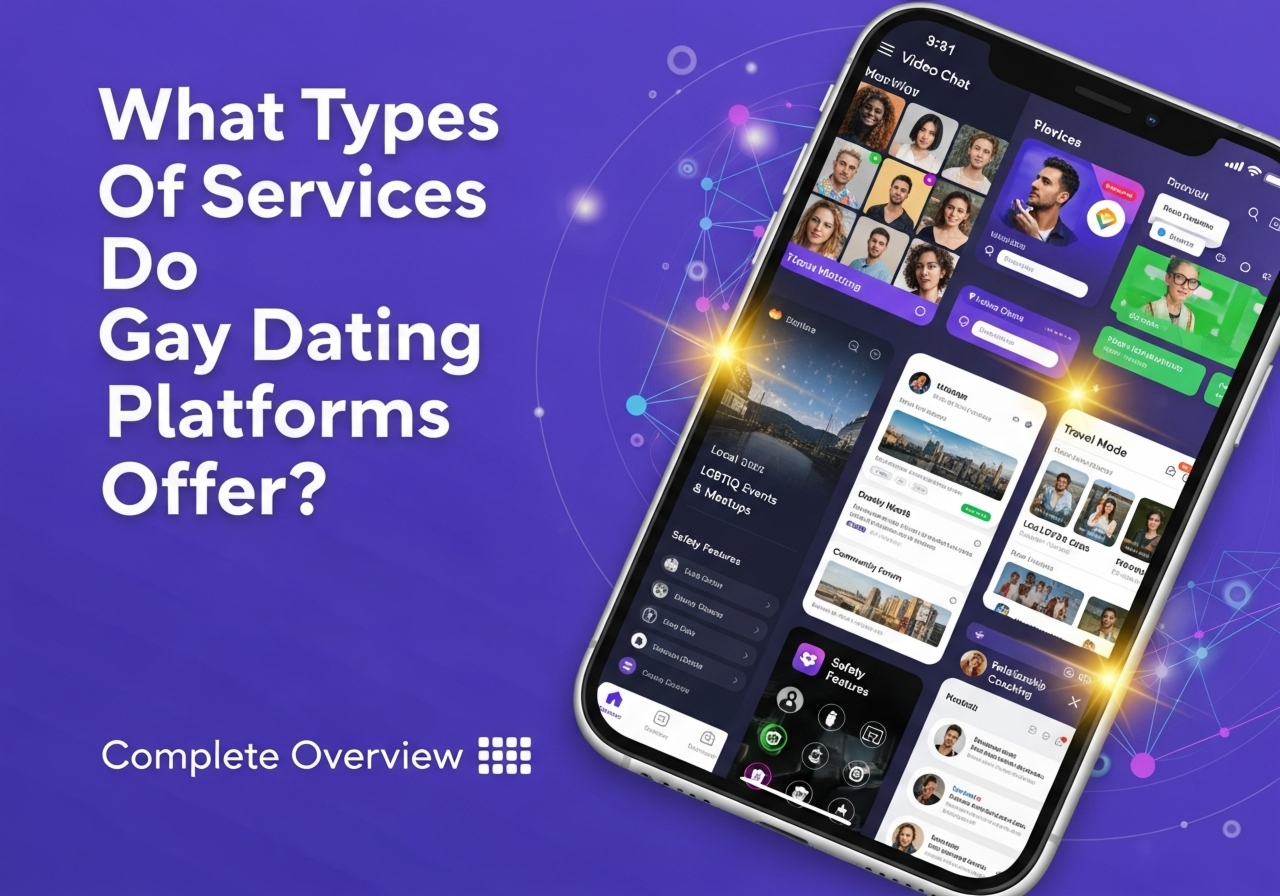
Are you curious about the specific services gay dating platforms provide and how they set themselves apart from mainstream dating apps?
What Types Of Services Do Gay Dating Platforms Offer?
This article explains the range of services gay dating platforms provide and how they differ from general dating apps. You’ll learn about core features, safety measures, community resources, specialized health integrations, premium offerings, and practical tips for choosing a platform that fits your needs.

Overview: What gay dating platforms aim to do
Gay dating platforms are designed to help men and other LGBTQ+ people meet, connect, and build relationships, whether casual or long-term. They often offer features tailored to queer experiences, identities, and safety needs that mainstream apps may not fully address.
Why specialized platforms matter
Specialized platforms cater to the nuances of LGBTQ+ dating, including identity labels, coming-out experiences, sexual health considerations, and targeted community support. When you use a gay-specific service, you’re typically accessing tools that acknowledge and respect those particular dynamics.
Core features: Profiles and identity presentation
Profiles are the backbone of dating apps, and on gay platforms they often support a wider range of identity fields and relationship preferences. You’ll find options for sexual orientation, gender identity, pronouns, relationship style (monogamous, polyamorous, open), and more nuanced descriptors that help you present yourself accurately.
Photos, bios, and additional fields
Most profiles include photos and a bio, but gay platforms commonly add fields for preferred word, sexual roles, and community interests. This helps you filter matches who align with your values and preferences before starting conversations.
Identity visibility controls
You often have granular control over what profile details are public or private, including the ability to hide certain aspects from non-verified users or to display safe-for-work vs. profile-only photos. These controls let you manage visibility while maintaining authenticity.
Matching and discovery tools
Gay dating platforms use multiple ways to connect you with potential partners, from algorithmic matches to location-based discovery. That variety helps you meet people who fit your goals—whether you’re looking for something local and spontaneous or a deeper connection.
Algorithmic matching
Many apps recommend matches based on shared interests, behavior patterns, and compatibility scores. These algorithms learn from your actions (likes, messaging behavior) to suggest users who are statistically more likely to be a good fit for you.
Search and filters
Advanced filters let you narrow results by age, distance, identity, relationship type, and other attributes. You’ll appreciate fine-grained search if you have specific preferences or health considerations you want to prioritize.
Location-based discovery
Geosocial features show nearby users and enable quick meetups. While convenient, these features usually include distance caps and safety reminders, since they can encourage impromptu in-person connections.
Messaging and communication features
Communication tools range from simple text chat to richer interactions like voice, video, and multimedia sharing. These capabilities let you build connection gradually and verify compatibility beyond profile snapshots.
Real-time chat and media
You’ll commonly find instant messaging with read receipts, voice messages, image sharing, and ephemeral photo/video options. Such features help conversations feel more natural and let you express personality beyond text.
Audio and video options
Video calls and voice notes bridge online and offline interaction by letting you gauge chemistry and authenticity. Many apps provide in-app calling to maintain privacy by avoiding phone numbers.
Safeguards for messaging
Platforms implement moderation, reporting, and blocking tools so you can control interactions. Some apps filter explicit content and automatically flag abusive language to reduce harassment.
Safety, privacy, and verification
Safety and privacy are central to gay platforms because users may face unique risks related to outing, discrimination, or targeted harassment. These services typically have stronger privacy tools and identity verification methods than generic dating apps.
Identity verification
Verification processes—such as photo checks, social media links, or ID verification—help reduce catfishing and fake accounts. You’ll often see badges or symbols indicating verified profiles, which can boost confidence in who you match with.
Privacy controls and anonymity
You can usually manage who sees your profile, blur images, or hide your precise location to protect your safety. Some apps allow anonymous browsing or private profiles for users who aren’t publicly out.
Reporting and moderation
Robust reporting systems let you flag abuse, hate speech, or discriminatory behavior. Quick moderation response times and clear community guidelines are important metrics to consider when you evaluate platforms.
Community-building features
Gay dating platforms frequently incorporate community-building elements—like groups, forums, and events—to foster a broader social environment beyond one-on-one dating. These tools help you find friends, allies, and support networks.
Groups and forums
Interest-based groups let you join conversations about hobbies, activism, or local scenes. These spaces can be less pressure-filled than one-on-one dating and help you expand your social circle.
Events and meetups
Many apps advertise or host queer events and meetups, from casual coffee gatherings to organized mixers. Event listings make it easier for you to meet people in a structured, safer setting.
Pride and cultural content
Platforms often feature editorial content, guides, and calendar highlights related to LGBTQ+ culture and history. This content can make the app feel more welcoming and culturally attuned to your experience.
Health-related services and integrations
Gay dating platforms increasingly connect users with sexual health information, testing resources, and tools like PrEP reminders. These integrations acknowledge real-world health concerns and make it easier for you to make informed decisions.
HIV status, testing, and disclosure tools
Some apps let you display your HIV status or last test date, or link to verified test records in a privacy-preserving way. These tools aim to normalize status disclosure and support safer sex practices.
PrEP and STI education
You’ll often find educational resources and reminders about PrEP, STI testing, and prevention methods. Some platforms partner with clinics or provide telehealth referrals for quicker access to care.
Telehealth and in-app referrals
A growing number of apps connect you with telehealth providers for sexual health consultations, prescriptions, and lab ordering. These integrations reduce friction when you need medical advice or medication.
Dating coaching, premium support, and concierge services
Beyond basic features, many gay platforms offer paid services like coaching, profile optimization, or concierge matchmaking to help you maximize your chances of success. These extras range from DIY guidance to highly personalized assistance.
Profile reviews and coaching
You can purchase professional profile reviews, copywriting help, or photo advice to improve your presentation and messaging strategy. Coaches often offer conversation starters and feedback to increase match rates.
Concierge matchmaking
Higher-end options include personalized matchmaking services where a professional selects candidates and arranges introductions. These are valuable if you prefer curated, time-saving approaches to dating.
Safety escorts and event help
Some platforms coordinate with local partners to provide event escorts, safety plans, or on-site support during large gatherings. These services aim to reduce anxiety around attending in-person events.
Monetization and premium features
Most platforms follow a freemium model: core services are free, while premium tiers unlock advantages like boosts, unlimited messaging, or advanced search. Understanding the monetization model helps you decide whether to invest in paid features.
Common paid upgrades
Premium features often include read receipts, unlimited likes, profile boosts, advanced filters, and ad-free experiences. You’ll decide if these perks align with your goals—frequent users may find them worthwhile.
Subscriptions vs. microtransactions
Some apps rely on monthly subscriptions, while others offer a mix of subscriptions and one-off purchases (boosts, super-likes). Subscription models usually provide the best value if you plan to use the platform long-term.
Ethical revenue practices
Quality platforms balance monetization with user experience, avoiding manipulative designs that pressure you into spending. Transparent pricing and clear benefits for paid tiers indicate healthier platform practices.

Inclusivity and identity support
Leading gay platforms work to be inclusive of trans, non-binary, and bi+ people. You should look for platforms that respect diverse identities through language, features, and policy enforcement.
Gender and orientation options
Inclusive apps offer a broad set of gender and orientation labels, customizable pronoun fields, and the ability to select multiple identities. This inclusivity helps you find people who appreciate your identity and avoid misgendering.
Trans-specific features and safety
Trans users benefit from enhanced safety measures, medical resource links, and community verification processes. Platforms that prioritize trans inclusion typically have stronger moderation to address harassment and discrimination.
Intersectionality
A good platform recognizes intersecting identities—race, religion, disability—and provides tools to surface shared cultural preferences while preventing fetishization. Intersectional features help you find matches who respect your full identity.
Moderation, legal compliance, and content policies
Gay platforms must comply with laws and enforce community standards, and you should understand how those systems protect you. This includes moderation policies, data handling rules, and responses to discriminatory content.
Community guidelines and enforcement
Clear guidelines define unacceptable behaviors (hate speech, harassment, doxxing) and outline consequences. Effective enforcement relies on human moderators and automated systems working together to act quickly.
Data protection and legal obligations
Platforms operating globally must comply with data protection laws like GDPR, CCPA, or local regulations for user safety. You should review a platform’s privacy policy to learn what data is collected and how it’s used or shared.
Dealing with harassment and hate crimes
Some platforms partner with legal or crisis support services to help users who face hate crimes or severe harassment. Rapid reporting channels and local resource referrals are valuable if you ever need urgent assistance.
How gay dating platforms differ from mainstream dating apps
There are practical and philosophical differences that affect your experience. Gay platforms typically place greater emphasis on identity, community, safety, and health than mainstream alternatives.
Identity-first design
Gay apps prioritize identity fields and respect nuanced labels, while mainstream apps may use simpler or binary options. This lets you express your identity more fully and find people who match on deeper criteria than looks alone.
Community orientation
Gay platforms often integrate community features—events, news, and local queer culture—that mainstream apps seldom include. These connections can turn a dating app into a broader social resource for queer life.
Health and safety integrations
Specialized sexual health features, disclosure tools, and PrEP guidance are more common on gay platforms because sexual health is a central community concern. Mainstream apps might omit or generalize these services.
Moderation and privacy expectations
Gay platforms tend to have more sophisticated privacy controls and stricter moderation around harassment targeted at sexual orientation or gender identity. This focus helps you feel safer while interacting.
UX and design tailored to queer users
The user experience on gay platforms often reflects community norms and cultural cues that mainstream apps don’t prioritize. Design choices—language, icons, and onboarding—signal that the app understands your social context.
Onboarding and safety prompts
Onboarding frequently includes prompts about privacy, disclosure preferences, and boundaries. These screens educate you and set expectations for respectful behavior within the community.
Visual and linguistic cues
Design elements and copy reflect queer culture and safe-space language, which can make you feel more at home. Small touches—like using inclusive examples in prompts—show the app is intentionally designed.
Case studies: different platform types
Gay dating services come in several flavors: hookup-focused, relationship-oriented, community hybrid, and niche-interest platforms. Knowing the differences helps you select a service that matches your goals.
| Platform type | Common features | Best for |
|---|---|---|
| Hookup-focused | Location-based discovery, anonymous chat, ephemeral photos | Short-term casual meets |
| Relationship-oriented | Matching algorithms, detailed profiles, coaching | Long-term relationships |
| Community hybrid | Groups, events, local guides | Building social networks |
| Niche-interest | Fetish or faith-based filters, tight moderation | Shared specific interests |
You can use this quick guide to identify whether a platform matches your intentions, whether you’re looking for hookups, romance, or social connections.
Choosing the right platform for you
Selecting the right app depends on your goals, safety needs, and preferred features. You should consider whether you want casual or serious relationships, how visible you’re comfortable being, and whether health integrations matter to you.
Questions to ask before signing up
Ask yourself: Are you seeking hookups, friendships, or a long-term partner? Do you require strict privacy and anonymity? Is access to sexual health resources important? Your answers will narrow down your choices.
Trial and cross-checking
It’s reasonable to test multiple apps to compare communities, moderation styles, and match quality. Use free features first and only upgrade when a platform consistently meets your needs.
Reading user reviews and policies
Look for recent reviews and scan privacy and safety policies. User feedback can reveal issues with moderation, scams, or poor customer support that may not be apparent initially.
Tips for safe and effective use
Using gay dating platforms effectively means balancing openness with caution. With the right habits, you’ll increase your chances of positive experiences and reduce risks.
Protecting privacy
Avoid sharing personal identifiers (home address, workplace) early in conversations. Use in-app calling where possible and set strict photo visibility settings if privacy is a concern.
Meeting people in person
Arrange first meetups in public places, tell a friend your plans, and keep your initial alcohol consumption moderate. Trust your instincts and leave if something feels off.
Communicating boundaries
Be clear about what you want—whether it’s casual or serious—and respect others’ boundaries too. Honest communication early on prevents mismatched expectations.
Common premium features and whether they’re worth it
You’ll encounter many paid options, and whether they’re worth the cost depends on how actively you plan to use the app and your dating goals.
Boosts and visibility tools
Boosts increase profile exposure for a limited time and can be helpful if you want quick visibility before an event or trip. Frequent users often see a clearer ROI from subscriptions that include boosts.
Unlimited messaging and advanced filters
If you message many matches or require very specific search filters, premium tiers can save time and increase match quality. Casual users may find free tiers sufficient.
Verification badges
Paid or included verification badges add credibility and reduce ghost accounts. If authenticity matters to you, a platform with strong, accessible verification tools is valuable.
Frequently asked questions (brief)
This section answers common concerns so you can quickly find practical guidance.
Are gay dating apps safe?
They can be safe if you choose platforms with robust moderation, verification, and privacy options. Your own habits—privacy choices, meeting protocols—also play a major role.
Will I be outed by using a dating app?
Not if you use privacy settings wisely. Select apps with anonymous browsing, limited photo visibility, and controls over who sees your profile to reduce risk.
Do gay apps report health data to others?
Reputable platforms keep health data private and compliant with data protection laws. Always review privacy policies and opt into health integrations only if you’re comfortable.
Final thoughts and next steps
Gay dating platforms offer a wide range of services designed to meet the needs of queer people—from identity-rich profiles and community features to sexual health integrations and enhanced safety tools. You should weigh your goals, privacy needs, and local context when choosing a platform, and consider trying multiple apps to find the community that fits you best.
If you’d like, you can tell me what you’re looking for (casual, serious, community, niche interests), and I’ll suggest features and platform types that are most likely to meet your needs.