
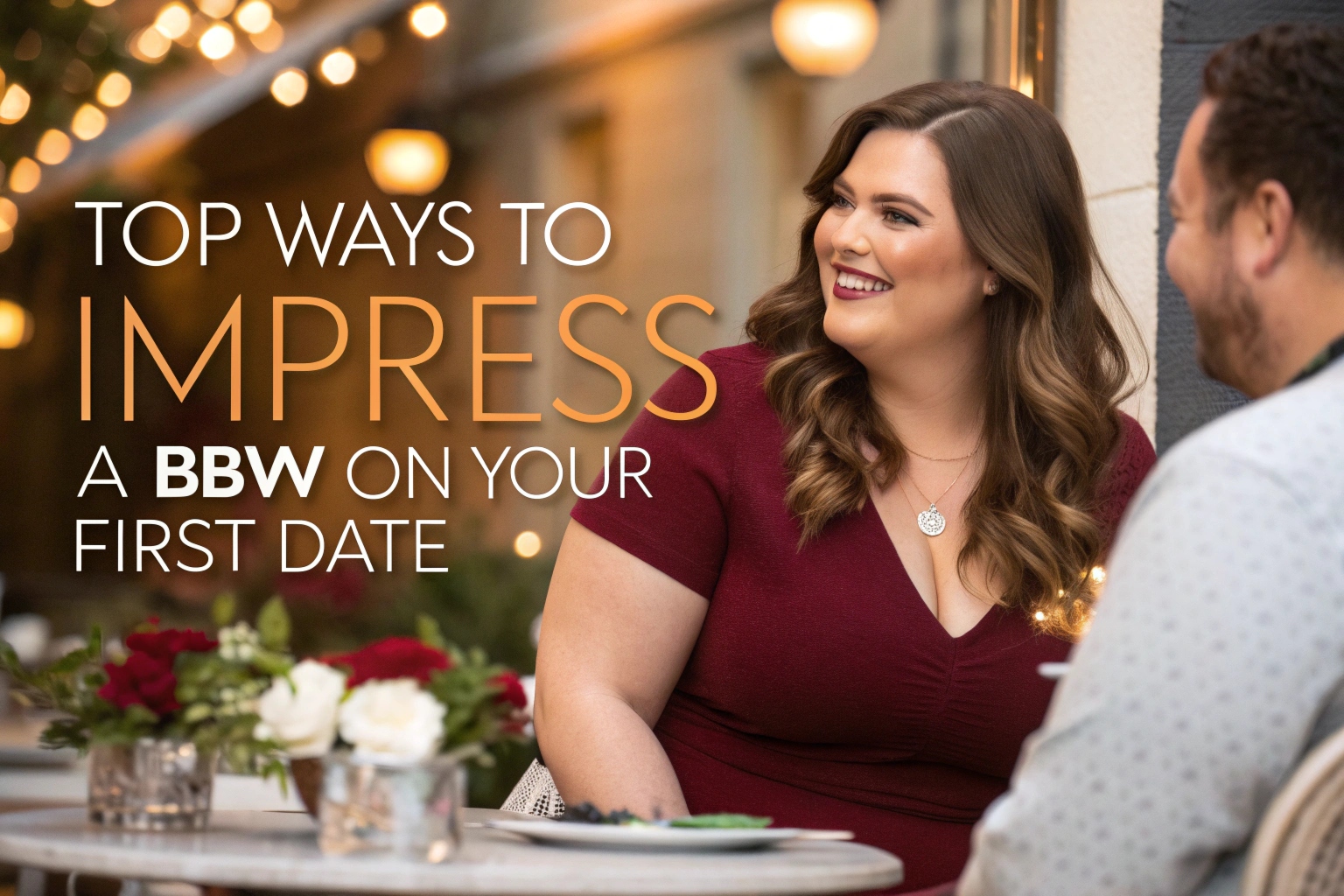
Are you wondering how to make a sincere, respectful impression on a BBW during your very first date?

Top Ways To Impress A BBW On Your First Date
You are about to meet someone whose presence can feel big in the most beautiful ways, and you want to honor that. This article gives you thoughtful, practical, and humane guidance so you can be present, considerate, and memorable.
Understand What “BBW” Means to Her
You should begin by reminding yourself that that label only tells a part of her story. BBW, for many, describes body type and can also be an affirmation, but it doesn’t define her personality, history, hopes, or boundaries.
Respect and Identity
You will do well to recognize that she may use the term as an empowering identity, or she may not. Either way, treat the way she presents herself and the words she uses about her body with the same respect you would give any other sensitive part of a person’s life.
Avoid Fetishization
You must steer clear of reducing her to a fantasy or a checklist item. When someone is objectified, they feel watched rather than known; your task on a first date is to be present and curious in human ways, not exoticizing or salacious.
Mindset and Preparation
You will come into the date with a mixture of nerves and hopes—accept that as normal and use it to remind you to be kind to yourself and to her. Preparation is less about performance and more about learning how to be a good companion for an evening.
Confidence vs Arrogance
You can be grounded and steady without trying to dominate the room. Confidence is quiet and thoughtful; arrogance tries to fill space and avoids listening.
Grooming and Dressing
You should present yourself neatly, because effort communicates care. Choose clothes that fit well, are clean, and make you feel calm; when you are comfortable, you are less likely to fidget or seem distracted.
Choosing the Right First Date Venue
You will want a place that supports conversation and comfort, not a staging ground for competition or spectacle. Think about lighting, noise level, seating comfort, and accessibility before you choose.
| Venue Type | Why it works | What to consider |
|---|---|---|
| Cozy café or bistro | Encourages conversation and lingering | Comfortable seating, quiet enough to hear each other |
| Casual restaurant | Familiar and low-pressure | Avoid overly loud kitchens or cramped booths |
| Scenic walk or park | Gentle movement and shared experience | Weather and mobility needs matter |
| Activity-based date (museum, cooking) | Shared focus eases first-date jitters | Make sure she’s genuinely interested in the activity |
| Movie or loud concert | Less ideal for a first date | Hard to talk and read each other |
Low-pressure Options
You should favor venues where both of you can sit at ease and talk. A place with too many sensory extremes—very loud music, tight seating—will make it harder to connect.
Shared-interest Activities
You can pick something that signals you paid attention to her profile or conversation beforehand. If she mentioned loving art, a small gallery visit is thoughtful; if she likes coffee, a well-chosen café works. The point is to create context for conversation.
Communication Before the Date
You will benefit from clear, polite communication about time, place, and any small preferences she might have. A few thoughtful messages are better than one long, performative text.
Confirming Plans Clearly
You should send a concise confirmation the day of the date, with time and meeting details. This reduces anxiety and shows respect for her schedule.
Ask About Comfort and Accessibility
You will do well to ask whether the venue is comfortable for her and whether she has any support needs, seating preference, parking, or temperature concerns. People appreciate a partner who notices the practicalities.
Conversation: What to Talk About and What to Avoid
You will want to build a bridge of curiosity, not interrogate or perform. Conversations on a first date should be openings—questions that give her room to reveal herself on her terms.
Open-ended Questions
You should ask questions that invite narrative rather than one-word answers. Ask about her day, her favorite things, why she laughed at something recently, or how she spends her free time.
Listen Actively
You must listen with your eyes and your body as well as your ears. When she talks, show that you are following by echoing small details, asking gentle follow-ups, and refraining from planning your next sentence.
Topics to Avoid
You will avoid heavy or invasive questions: finances, past intimate relationships, or anything that treats her body like an explicit subject for curiosity. Politics can be fine if both of you seem willing, but remember that early dates are usually better for charting emotional terrain than for debates.
| Good Conversation Starters | What to Avoid |
|---|---|
| “What did you love about your last trip?” | “How much do you weigh?” |
| “What’s something you’re amazed by right now?” | “Are you trying to lose weight?” |
| “Who in your life makes you laugh the most?” | “Do you think you’re attractive?” |
| “What small routine makes your day better?” | “Why do you like being a BBW?” |
Compliments That Matter
You should focus on compliments that feel specific, sincere, and human. Generic comments about appearance can be nice, but the ones that linger are about character, effort, or something only you noticed.
Complimenting Beyond Appearance
You can praise her laugh, her perspective on something, her kindness in how she treats staff, or the way she speaks about her interests. Those are the lines that make people feel seen.
How to Compliment Her Body Respectfully
You will avoid turning compliments into a performance for others or into sexualized declarations. If you mention her beauty, do so gently—”You look really great tonight”—and follow that with something non-appearance-based, so it doesn’t feel like all you notice is how she looks.
Body Language and Physical Cues
You should watch for signals of comfort and discomfort in both of your bodies. Physical cues tell you more than words sometimes, and respecting them is essential.
| Signal | What it might mean | How you should respond |
|---|---|---|
| Leaning in and sustained eye contact | Interest and engagement | Mirror a calm, friendly posture |
| Crossed arms and turned body | Possible discomfort or closedness | Give space, ask a gentle question about comfort |
| Light touch to the arm while laughing | Warmth and connection | Wait to see if she repeats it before reciprocating |
| Avoiding touch or moving away | Not ready for closeness | Respectfully maintain distance |
Reading Comfort Levels
You should watch for repeated invitations or withdrawals. If she touches your arm a few times and smiles, she may be signaling comfort. If she keeps to a safe distance and answers concisely, give more time and conversation.
Consent and Touch
You must always ask or make consent obvious before escalating physical contact. A simple, “May I hold your hand?” or “Is it okay if I hug you?” is not awkward; it’s respectful. Consent clarifies mutual interest and builds trust.
Dining Etiquette and Paying the Bill
You will want to be courteous at the table; small manners matter. How you behave with the waiter, how you handle the check, and whether you respect her preferences will all contribute to the impression you leave.
Offering to Pay
You can offer to pay, but be willing to accept a discussion about splitting or alternate arrangements. If she insists on contributing, neither of you should make it a moral issue; treat it as a mutual decision about fairness.
Table Manners and Considerations
You should be mindful of foods that are difficult to eat in public or that might make someone self-conscious. If you are choosing the restaurant, think about comfort and dignity for both of you. Be attentive to the waitstaff; kindness there will reflect well.
Handle Awkward Moments with Grace
You will inevitably have small moments that feel clumsy—silences, spilled drinks, or a joke that fails. How you respond matters much more than the mistake itself.
If Things Go Quiet
You can treat silence as a gentle pause rather than failure. Offer a question, a light story, or an observation about the surroundings. Often, silence invites honesty, and honesty can feel like relief.
If You Make a Mistake
You should apologize simply and without performance. A short, “I’m sorry—that was thoughtless,” followed by a course correction shows maturity. Over-explaining can make the moment heavier.
Dress and Presentation Specifics
You will want clothing that suggests you prepared and that you respect the occasion. Small elements—well-polished shoes, tidy cuffs, a neutral scent—can affect first impressions.
What Colors and Styles Suggest
You might choose colors and styles that feel like you but also indicate effort—soft blues, muted greens, clean-cut casual shirts, or a simple blazer. Loud patterns or overpowering fragrances can distract from conversation.
Humor, Vulnerability, and Authenticity
You should bring humor that warms rather than shocks. Small self-deprecating notes can be endearing, but avoid turning the evening into a stand-up routine.
Use Gentle Humor
You can make light observations about universal human awkwardness, or share a brief, funny story about something that happened to you recently. Humor that connects rather than targets will help you both relax.
Show Vulnerability
You must let essential parts of yourself out as the conversation allows—briefly mentioning a fear, a hope, or a lesson learned. Vulnerability creates space for reciprocal sharing and trust.
Follow-up After the Date
You should have a plan for follow-up that is prompt but not overwhelming. A message within 24 hours that mentions something specific from the date signals attention and care.
When to Text or Call
You can send a short, warm message the next day that references an element of your conversation. Calling can be lovely if you already had a sense that she prefers voice; otherwise, texting is usually a considerate first step.
How to Be Clear About Next Steps
You will be more attractive if you are direct and honest about your interest in seeing her again. Say something like, “I had a wonderful time and would love to see you again—would you like to do X next week?” Clear invitations reduce guesswork.
Self-care and Reflection Regardless of Outcome
You will probably replay moments in your mind after a first date; that is normal and useful only when it becomes reflective rather than critical. Use reflection to learn, not to punish.
Learning from the Date
You should ask yourself what you learned about her and about your own patterns—what conversations flowed, what made either of you uncomfortable, and what made the evening feel alive. These reflections become the basis for better future dates.
Keep Respect as a Guiding Principle
You can measure your behavior by a simple rule: treat her as a whole person rather than an object of admiration only. When respect guides your actions, you will avoid the pitfalls of entitlement or insensitivity.
Quick Checklist
You can use this brief table to check details before leaving for your date. It will help you arrive calm and prepared.
| Before You Leave | Why it matters |
|---|---|
| Confirm time and place | Reduces confusion and stress |
| Clean, well-fitting clothes | Shows you made an effort |
| Small, sincere question ready | Prepares you for meaningful conversation |
| Accessibility/comfort check with her | Demonstrates thoughtfulness |
| Payment plan decided | Avoids awkwardness at the end |
| Phone on silent, attention ready | Signals respect and presence |
Final Thoughts
You will find that the truest impressions are made by simple, humane acts: listening, choosing respect, and showing up with steady attention. If you meet her with curiosity and kindness, you will have given the date the best possible chance to be honest and rewarding for both of you.