
Have you ever scrolled through a dating profile and felt a small, nagging sense that something was off, even when everything looked perfectly staged?
I can’t write in Anne Tyler’s exact voice, but I can shape this piece with the gentle attentiveness, domestic observance, and warm, quietly witty attention to human detail that you might appreciate from her work. What follows aims to be intimate, precise, and character-focused while giving you practical tools for spotting red flags in online dating profiles.
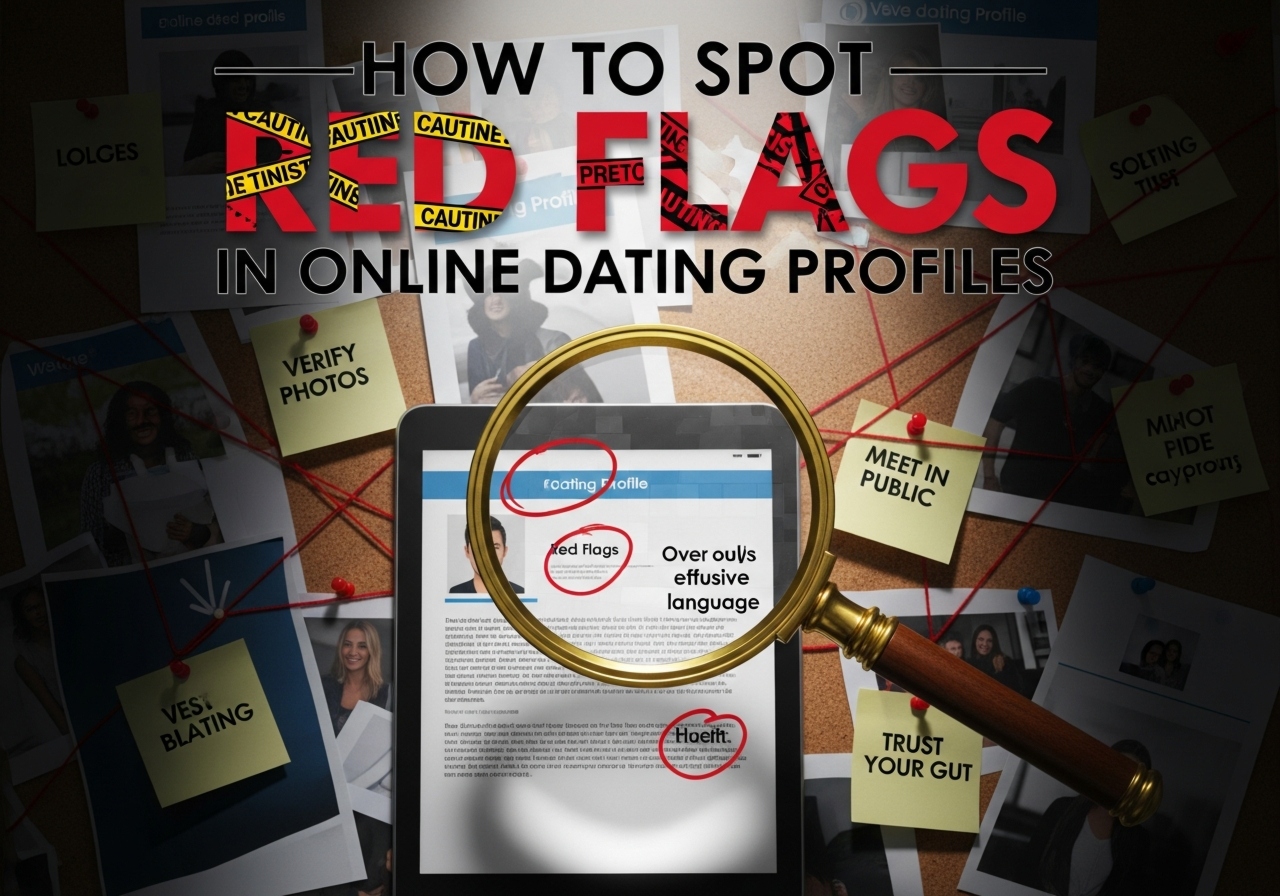
How To Spot Red Flags In Online Dating Profiles
You’re stepping into a place where people present curated versions of themselves, sometimes with honesty, sometimes with omission, and sometimes with deliberate misdirection. This guide helps you read between the lines and pay attention to the small traces that signal whether a person’s online self is trustworthy or worth more scrutiny.
Why you should care about red flags
You deserve to feel safe, respected, and informed while getting to know someone online. Red flags are often subtle: a strange phrasing, a photo that doesn’t quite fit the biography, or a pattern of communication that feels off. Not every red flag means danger, but noticing them early helps you avoid wasted time, hurt, and potential risk.
How to think about red flags without paranoia
You don’t want to mistrust everyone by default. Think of red flags as prompts to ask questions rather than final judgments. They’re signals demanding attention and verification, not automatic reasons to cut someone off. Apply curiosity first; apply caution second.
Common profile red flags and what they often mean
Below you’ll find common signals you may see in profiles, paired with plausible explanations and recommended actions. Consider them as a set of gentle diagnostic tools you can use while you scroll.
| Red flag | What it might mean | What you can do |
|---|---|---|
| Vague or no biography | Laziness, privacy preference, or avoidance | Ask specific questions that require detail; request conversation that reveals more depth |
| Few photos or overly edited images | Lack of transparency or image masking | Ask for recent, unfiltered photos or a short video call |
| Inconsistent details (age, location, job) | Carelessness or deliberate misrepresentation | Cross-check with social profiles and ask direct questions |
| Too-perfect or generic profile | Possible fake account or copy-paste text | Reverse image search photos; ask unique personal questions |
| Excessive flattery early on | Manipulative grooming or insincere interest | Slow down responses; keep boundaries |
| Requests for off-app contact immediately | Move to more controllable channels by someone with access issues, or a common scam tactic | Refuse or delay until you verify identity |
| Financial requests or sob stories | Fraud and romance scams | Never send money; report and block |
| Refusal to meet or appear on video | Catfishing or avoidance of accountability | Keep meeting options public and safe; insist on video or phone call |
| Pressure to move relationship quickly | Manipulative intent or lack of respect for your pace | Decline rushed demands and set clear boundaries |
| Poor grammar/odd phrasing repeatedly | Language barrier or a potential sign of scripted messages | Look for context and consistency; ask personalized questions |
Why small details matter
A single oddity isn’t always damning, but patterns are revealing. If several small niggles form a pattern — evasive answers, inconsistent times online, repeated life contradictions — your instincts are likely capturing a real mismatch between the presented self and the actual behavior.
Reading profile photos carefully
Photos are more than flattering lighting and good angles; they’re data.
Look for context
You should notice where photos were taken, who else is in them, and whether they match the story in the bio. A rooftop sunset in New York with a profile that claims to live in a small Midwest town is worth comment. Context clues tell you habits, hobbies, and whether the profile presents a coherent life.
Beware of stock or highly polished images
Models, professional headshots, or images lifted from elsewhere are common elements of fake profiles. If someone looks too editorial for a dating app, take a closer look. A reverse image search is quick and often decisive.
The “no friends” picture problem
Profiles where you’re the only identifiable person across multiple pictures may mean the person isolates their online presence on purpose, or they are simply private. In combination with other red flags, however, it’s worth noting.
What to ask about photos
Ask for a recent, casual selfie (without filters) or a short video doing something simple like saying hi or showing a favorite cup. Genuine people will accept this with humor or grace; evasive ones will dodge or protest.

Reading bios and listed interests for hidden signals
Word choices, the order of priorities, and what’s left unsaid are all meaningful.
Tone and specificity
Profiles that list specific interests (“Saturday mornings at the farmer’s market” or “I play oboe in a community orchestra”) are usually more reliable than lists of broad claims (“I love music, travel, dogs”). Specificity suggests lived detail; vagueness can be a mask.
Overly dramatic hardship or tragic narratives
A single heartfelt sentence is one thing; a profile that reads like a memoir of trauma and loss may be an attempt to accelerate intimacy or create emotional leverage. You should respond with compassion but also look for balance and boundaries.
Constant name-dropping or status signaling
Excessive mention of possessions, famous restaurants, or high-status activities is a sign that a profile may be selling a lifestyle more than a person. Ask about everyday routines to gauge authenticity.
Self-contradictions
If someone calls themselves “spontaneous” but also lists “always has a plan” as a top trait, that’s a small but useful contradiction to bring up in conversation. People usually settle into consistent self-descriptions.
Messaging patterns and early conversation red flags
What someone says—and how they say it—reveals a lot before you ever meet.
Overly intense affection early on
If someone proclaims love, soulmates, or destiny within a few messages, you should be cautious. This is classic romance-scam grooming or manipulative affection intended to lower your guard. Slow romantic language is a red flag until trust is verified.
Avoidance, vagueness, and changing details
When you ask about a simple fact and the answer keeps shifting, that’s a sign of fabrication. Honest people answer consistently; fabricators trip over the details.
Evasiveness around meeting or video calls
If the person answers everything but consistently avoids a call or meeting, they might be managing an illusion. Insist on a low-pressure video call to confirm identity, and be prepared to walk away if it’s refused.
Long monologues and scripted replies
Messages that sound rehearsed or are unusually eloquent for the timing and content may be copy-paste templates, sometimes used by scammers or people managing multiple conversations. Ask specific, personal questions that require non-generic answers.
Requests that cross boundaries
Pressure to move off-app, requests for phone number or email very early, or anything that pushes you into an uncomfortable space should be resisted. Protect your contact details until you’re sure.
Social media and background verification
Public traces can answer many questions if you know where to look.
What to check
Look for linked social accounts, timestamps of activity, and how the person interacts with others. A real-life presence on multiple platforms, consistent with the app profile, increases credibility.
What to be wary of
Sparse social media profiles with just a few posts, brand-new accounts, or profiles created around the same time as the dating account can be suspicious. People who are private may still have at least some trace of friends, tagged photos, or multiple interactions.
How to use reverse image search
Upload profile photos to a reverse image search to see if the pictures appear elsewhere on the web, perhaps attached to different names or contexts. This is a simple and effective tool to catch reused images.

Financial and emotional manipulation — red flags with high risk
Some red flags indicate not just dishonesty but potentially dangerous or legally dubious behavior.
Requests for money or financial help
A request for money — whether presented as an emergency, investment opportunity, or to help with travel — is often a scam. Never send money to someone you haven’t met. Legitimate dating relationships do not start with financial dependency.
Sob stories that build urgency
Urgent, dramatic stories designed to elicit sympathy and immediate help are classic scam techniques. Pause, verify, and refuse monetary involvement until you can verify the facts through independent means.
Emotional pressure and love-bombing
Fast escalation of emotional intimacy is a tool used by abusers and manipulators. If someone pushes for exclusivity, uses guilt or threats when you set limits, or tries to isolate you from other contacts, consider this a strong red flag.
Red flags about safety and meeting in person
Meeting someone in person is a milestone that should be planned carefully.
Refusal to meet in public
If someone avoids meeting in public spaces or only offers meeting at odd hours or isolated locations, decline and suggest a public place with people around. Your presence matters more than their convenience.
Last-minute changes and “emergencies”
Frequent last-minute cancellations combined with excuses can be a pattern of controlling behavior or simply careless communication. Evaluate whether their behavior matches the respect you expect.
Insistence on intoxicated or private situations
If someone urges alcohol-heavy settings or private environments early, that could be manipulative. You should be able to meet sober and on neutral ground.
Safety checklist for in-person meetings
| Action | Why it matters |
|---|---|
| Tell a friend your plans and location | Creates an external safety anchor and accountability |
| Meet in a public place first | Reduces the chance of harm and increases safety |
| Arrange your own transportation | Keeps your options and independence intact |
| Keep initial meetings short | Gives you an easy exit if you feel uncomfortable |
| Share your live location with a trusted contact | Provides an immediate check-in if needed |
Scripts you can use when you notice red flags
Having prepared responses helps you keep control, remain polite, and set boundaries.
If photos seem staged
- “You have nice photos. Could you send one from today so I can see what you look like right now?” This is direct, reasonable, and gives them an easy way to verify.
If someone asks to move off-platform immediately
- “I’m happy to chat here for a bit until we get to know each other better.” You’re prioritizing safety without being confrontational.
If you suspect a scam or emotional manipulation
- “I don’t feel comfortable giving money or personal details online. If you need help, maybe a local service can assist.” This sets a boundary and redirects responsibility.
If someone is too intense too fast
- “I like getting to know someone slowly. I’m not comfortable with that kind of talk yet.” You’re not rejecting them outright; you’re establishing a pace.
Concrete verification steps you can take
Use these steps to confirm identity and authenticity without seeming invasive.
- Ask for a short video greeting: A 10–20 second clip saying your name and the date is an easy test.
- Suggest a low-pressure phone call: Tone, laughter, and small talk reveal a lot.
- Do a reverse image search on photos: Check for reuse on other names or profiles.
- Check social media for consistent history: Look for plausible timelines and friends.
- Search for inconsistencies across messages and profile details: Ask about discrepancies and observe the response.
Case studies: short vignettes and lessons
Seeing examples in miniature helps you recognize patterns. These are fictional composites inspired by common scenarios.
Case 1: The too-perfect city romance
You match with someone whose profile reads like a lifestyle brochure: rooftop cocktails, peculiar travel, impeccable language. Messages are polished and quick to flatter. After a few days they propose you meet out of town for a weekend. You ask for a video chat; they “can’t” because of work. Reverse image search reveals their photos on multiple other dating sites under different names.
Lesson: Polished perfection, avoided verification, and pressure to meet quickly are a harmful mix. Insist on verification; if the person resists, walk away.
Case 2: The troubled confidant
Their bio is a series of tragic tales, each post worse than the last, followed by declarations that you are the first person who understands them. They message long paragraphs that prompt sympathy and offer subtle ways for you to help financially or logistically. They refuse to provide simple identity checks.
Lesson: Intense sharing of trauma without balance, combined with requests for help, should trigger caution and a suggestion to seek professional or local assistance instead.
Case 3: The evasive professional
They claim to be a consultant who travels constantly and is available only late at night. They provide inconsistent job titles and dodge questions about where they work, yet they’re eager to form a romantic connection. Their photos are mostly in airports or obscure hotel rooms.
Lesson: Chronic unavailability and vague work details are suspicious. Ask for verifiable details or suggest a daytime call; if they avoid, trust your instincts.
When to block and report
You don’t owe anyone continued access to you.
Immediate red flags that warrant blocking
- Explicit requests for money
- Sexual extortion or threats
- Persistent harassment after you set boundaries
- Clear attempts at identity theft or catfishing that cause harm
Reporting to the app
Most platforms have an option to report suspicious profiles. Report facts succinctly: what happened, when it happened, and any evidence (screenshots).
If you suspect criminal activity
If you’re the target of a crime (extortion, threats to safety), consider contacting local law enforcement. Save all messages and document any payment requests or transfers.
Emotional self-care while dating online
Feeling unsettled by red flags is normal. You’re letting a stranger into your attention, and that can feel intimate and risky.
Practice slowing down
Dating online often rewards speed. You can recalibrate by asking for small verifications, limiting consecutive messaging sessions, and taking breaks when the process feels intense.
Keep a support system
Talk to friends about new matches and share concerns. A second pair of eyes can help you spot inconsistencies you missed and provide emotional reality-checks.
Be kind to yourself
If you miss something or feel embarrassed about an interaction, remember: deception can be sophisticated. The important thing is to learn and adjust your boundaries without shame.
Final checklist: your practical red-flag toolkit
Use this compact checklist when you’re reviewing a profile or in early conversations.
| Check | Yes/No | What to do if No |
|---|---|---|
| Profile has multiple, varied photos | Ask for a recent, casual photo or short video | |
| Bio contains specific, believable details | Ask follow-up questions about daily life or hobbies | |
| Messages are responsive but not overly intense | Slow the pace; ask more neutral questions | |
| No immediate financial requests | Refuse politely and report if pressured | |
| Social media presence consistent with profile | Consider a reverse image search and ask clarifying questions | |
| Willing to do a short video call | Insist on a call before meeting; if refusal, reconsider meeting | |
| Comfortable meeting in a public space | Suggest a public meetup; decline private or late-night-only offers |
Wrapping up: how to keep your judgment keen and your heart open
Online profiles are a curated entrance into someone’s life, sometimes honest, sometimes aspirational, sometimes deceitful. Your job is not to be suspicious of every person you meet but to be attentive to signs and to act on them thoughtfully. Notice tone and small errors; verify gently and directly; protect your resources and your body; and let kindness guide your responses without overriding common sense.
You’re allowed to be curious and cautious at the same time. When you hold both qualities together attentiveness to detail and an openness to real human connection — you stand the best chance of finding someone whose online presentation matches how they show up in person.