
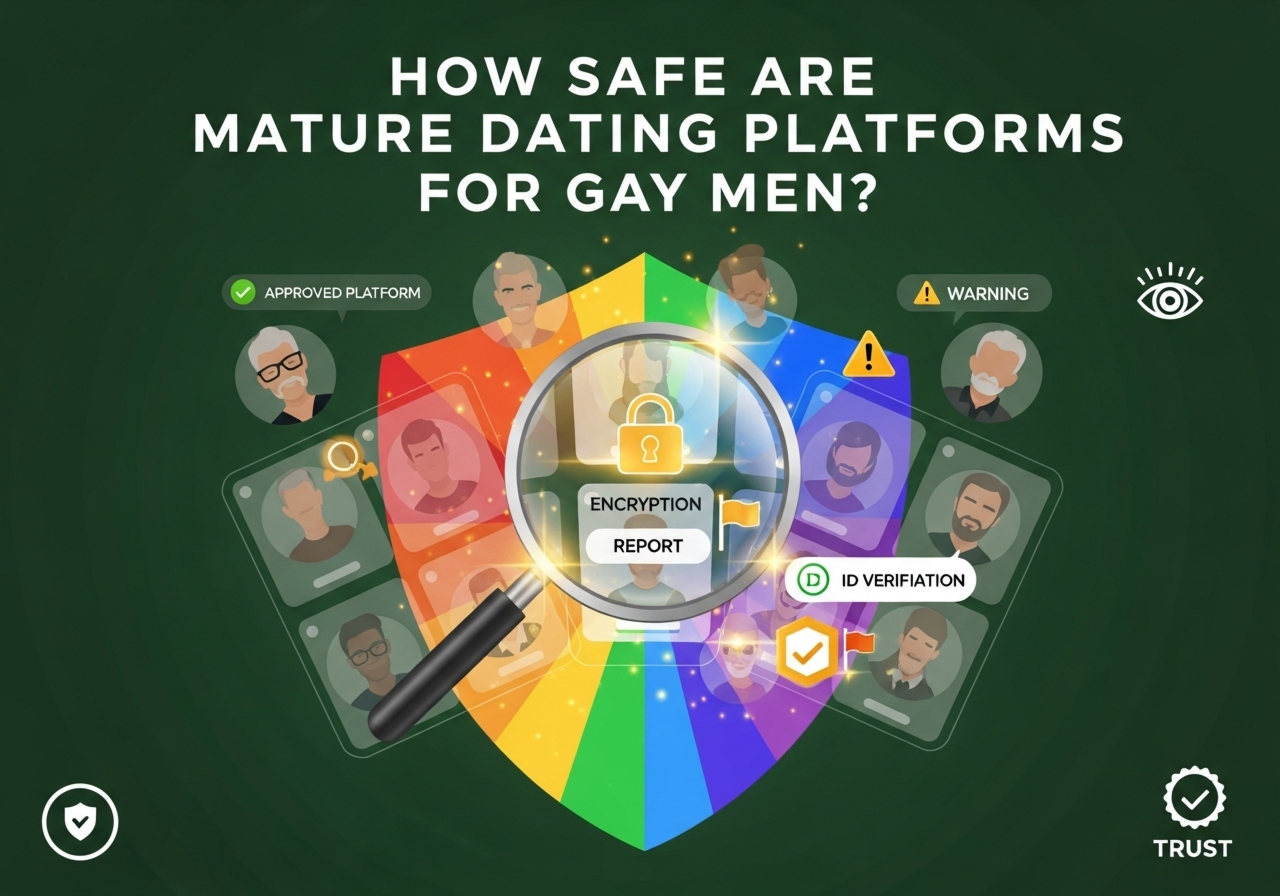
Are mature dating platforms safe enough for you to trust with your heart, identity, and personal information?
How Safe Are Mature Dating Platforms For Gay Men?

Introduction
You want companionship, connection, and perhaps romance without putting your safety or privacy at risk. This article answers the central question about safety on mature dating platforms for gay men and gives you actionable guidance so you can make smart choices.
What are mature dating platforms?
Mature dating platforms are websites and apps that cater to older adults seeking relationships, companionship, or sexual connections. They often emphasize long-term dating, companionship after divorce or widowhood, or meeting people with shared life experience.
Typical features of mature dating platforms
These platforms usually offer profile creation, private messaging, search filters (age range, location, interests), and sometimes premium features like advanced search, identity verification, or video calling. You’ll also often find community features such as forums or events geared toward older users.
Differences between mainstream and niche gay dating platforms
Mainstream apps may prioritize mass-market features and quick matches, while niche gay mature platforms focus on the needs and safety concerns of older gay men. You should expect different moderation styles, privacy features, and community norms between mainstream and niche options.
Main safety concerns for gay men on mature dating platforms
Safety for you covers physical safety, emotional safety, financial security, privacy, and reputation. Knowing the common threats gives you power to avoid them and to respond effectively if something goes wrong.
Scams and financial fraud
Scammers often target older adults because they may have more financial resources and less familiarity with online scams. You should be cautious of anyone who quickly asks for money, gifts, or investment help, or who claims an emergency that requires financial transfer.
Catfishing and fake profiles
Catfishing is when someone uses an invented identity or stolen photos to deceive you. It’s a widespread problem across dating platforms and can lead to emotional harm, financial loss, or safety risks if you meet in person. Always verify identities and be skeptical of overly perfect profiles.
Privacy and data breaches
Platforms store sensitive personal data like sexual orientation, health information, conversations, and payment details. Data breaches can expose this information, leading to potential outing, blackmail, or identity theft. You should consider what you share and choose platforms with strong security practices.
Harassment, hate speech, and abuse
You may encounter harassment, verbal abuse, or targeted hate based on your identity, age, or other factors. These behaviors range from rude messages to stalking and can escalate if not addressed. Platforms with active moderation and reporting tools are safer for dealing with problems.
Age-related vulnerabilities
As a mature man, you might face specific vulnerabilities such as elder financial abuse, generational differences in tech literacy, or health-related privacy concerns. Scammers and abusers sometimes prey on perceived loneliness or lower digital fluency.
Health and sexual safety
Discussions about sexual health, HIV status, and safer-sex practices are common in gay dating contexts. Misrepresentation about sexual health or pressuring for unsafe sex can put you at risk. Protecting your sexual health includes honest communication, setting boundaries, and using protection.
Discrimination, outing, and confidentiality
If being publicly identified as gay could harm your relationships, career, or safety, the risk of being outed via a platform or data leak is serious. You should use privacy controls and be careful with photos and identifying details that could be traced back to you.
How platforms try to protect users
Many platforms have built-in safety features to protect you, though the quality and enforcement vary. Knowing what to look for helps you choose a safer platform and use it effectively.
Common safety and privacy features
Platforms may offer verified profiles, two-factor authentication (2FA), SSL encryption, moderation and reporting tools, content filters, and restricted photo visibility. These features reduce fake accounts, protect data in transit, and help you manage harassment.
Verification processes explained
Verification can include ID checks, selfie verification, or linking to other trusted accounts. While verification reduces the chance of fake profiles, it also raises privacy questions since you might have to share sensitive documents. Always check how platforms store and handle verification data.
Moderation and community enforcement
Active moderation—using human moderators and AI tools—can remove abusive users and content. Community reporting is effective when reviewers act quickly, but platforms vary in responsiveness. You should test reporting tools and note how promptly the platform handles abuse.
Platform policies and transparency
Look for clear terms of service, privacy policies, and safety guidelines. A trustworthy platform explains how it handles data, incident response, refunds, and cooperation with law enforcement. Transparency about policies signals a higher commitment to user safety.
How to evaluate a platform before joining
You should research platforms before creating a profile so you don’t expose yourself unnecessarily. A careful evaluation reduces the risk of scams, data exposure, and harassment.
Key questions to ask before you sign up
Ask whether the platform uses HTTPS and 2FA, whether it verifies users, how fast it responds to reports, what data it collects, and whether it shares data with third parties. You should also check user reviews, community size, and whether the platform has a reputation for tolerating abusive behavior.
Step-by-step evaluation checklist
- Read privacy policy and terms of service.
- Search for data breach history and news articles.
- Look for active moderation and community guidelines.
- Confirm the platform uses secure payment processors for subscriptions.
- Test customer support responsiveness with a question or report.
Platform features comparison table
| Feature | Why it matters | What to look for |
|---|---|---|
| Encryption (HTTPS) | Protects data sent between you and the site | URL starts with https:// and a lock icon |
| Two-factor authentication (2FA) | Adds security to your account login | Option for SMS or authenticator app |
| Identity verification | Reduces fake profiles | Clear verification badge and process explained |
| Reporting and blocking | Helps you stop abuse quickly | Easy, visible buttons and clear follow-up |
| Active moderation | Removes harmful content and users | Evidence of moderator intervention and community guidelines |
| Payment security | Protects your financial data | Reputable payment processor and billing transparency |
Creating a safer profile and communication habits
Your profile and how you communicate set the tone for safety. You don’t need to be scared, but smart and cautious.
What to include in your profile
Share enough to attract compatible people—interests, age range, what you’re looking for—without exposing sensitive personal data. Avoid using full name, workplace, exact address, or photos that identify your daily hangouts.
Photo and identity guidelines
Use clear, recent photos but avoid images that include your home, vehicle license plates, family members, or work ID badges. Consider using photos taken in public places that don’t reveal personal locations.
Messaging best practices
Use in-app messaging for as long as possible so the platform can help if something goes wrong. Keep personal details private until you build trust, and be cautious about clicking links or downloading files someone sends.
Sharing contact and personal information
Don’t give out your phone number, social media handles, home address, or workplace until you trust someone and have verified their identity. If you do move to other platforms, use transitional contact methods like a secondary email or temporary phone number.
Using video calls as a verification tool
A short video call is one of the fastest ways to confirm someone’s identity without meeting in person. Arrange a daytime video chat and ask specific questions that a catfish likely couldn’t answer consistently.
Meeting in person safely
When you decide to meet someone face-to-face, prioritize your safety and plan ahead.
Pre-meet preparations
Tell a trusted friend where you’re going, who you’re meeting, and share the person’s profile link or photos. Set a check-in time and consider using live location sharing temporarily.
Choosing a location and logistics
Pick a public, well-lit venue like a café or hotel lobby for the first meetings and avoid private homes for the initial encounter. Arrange your own transportation so you can leave whenever you want.
On the date: boundaries and signals
Keep alcohol consumption moderate and trust your instincts. If you feel uncomfortable, have an exit plan like calling your friend, ordering a ride, or saying you’re not feeling well.
If things escalate or go wrong
Have emergency contacts programmed into your phone and consider apps that can send an SOS with your location. If you’re threatened, call local emergency services and report the incident to the platform.
Recognizing red flags
Spotting red flags early protects you from scams, manipulation, and harm. Use your judgment and don’t ignore instincts.
Red flags table: signs and actions
| Red flag | What it might mean | What you should do |
|---|---|---|
| Asks for money or financial help | Scam or manipulation | Refuse, block, report, never send money |
| Refuses to video chat or meet in public after long contact | Possible catfish or dodging verification | Insist on verification or end contact |
| Pushes for personal details quickly | Grooming or exploitation | Slow down, set boundaries, block if needed |
| Uses overly emotional stories to solicit help | Romance scam | Verify independently, decline money requests |
| Asks for explicit photos early | Pressure for sexual content or blackmail risk | Refuse, don’t share, report if threatened |
| Inconsistent stories or profile details | Possible fake identity | Verify photos, check for contradictions |
| Avoids questions about basic details | Evasive behavior | Ask direct questions or end contact |
Behavioral red flags beyond the profile
Watch for controlling or manipulative language, guilt-tripping, or repeated boundary-pushing. If someone makes you feel ashamed for setting limits, that’s a major warning sign.

What to do if something goes wrong
You should know your options and preserve evidence if you face scams, harassment, or threats. Acting quickly improves chances for resolution.
Immediate steps after a problem
Document the conversation by taking screenshots, saving messages and dates, and noting usernames. Use the platform’s reporting feature and block the user to stop further contact.
Escalating beyond the platform
If you’ve been threatened, defrauded, or physically harmed, contact local law enforcement and provide your evidence. For financial scams, also contact your bank or payment provider immediately to dispute transactions.
Legal and support resources
Look for local LGBTQ+ support centers and legal aid organizations that can help with harassment, discrimination, or assault. Some countries have hotlines and specific services for LGBTQ+ victims.
Protecting your financial and digital security
Your digital habits influence your financial safety. Follow basic cybersecurity practices to reduce risks of theft and fraud.
Payment and subscription safety
Use credit cards rather than wire transfers or gift cards for platform subscriptions or other transactions. Credit cards often offer better fraud protection and easier dispute resolution.
Avoid sending money or gift cards
Scammers commonly ask for gift cards, wire transfers, or cryptocurrency because these are hard to reverse. Never send money to someone you’ve only met online, regardless of how convincing their story sounds.
Account security and passwords
Use unique, strong passwords for each platform and enable 2FA where available. Password managers can help you maintain complex passwords without memorizing them.
Protecting personal devices
Keep your phone and computer software updated, use a reputable antivirus program if appropriate, and avoid using public Wi-Fi for sensitive activities. If you do use public Wi-Fi, use a VPN to protect data in transit.
Age-specific considerations for mature men
Being older can change the kinds of risks you encounter and the ways you manage them. Addressing these helps you date with confidence.
Financial vulnerability and elder abuse
Older adults can be targets for financial exploitation through romance scams or coercion. If you worry about your financial safety, consider discussing boundaries with a trusted family member or advisor before becoming involved.
Digital literacy differences
If you’re less familiar with current apps and scams, spend a bit of time learning common online safety practices and ask a tech-savvy friend for guidance. Many LGBTQ+ community centers offer workshops for older adults on online safety.
Emotional and social considerations
Dating later in life can stir grief, loneliness, or anxiety about intimacy. You should pace yourself, set realistic expectations, and seek emotional support when needed.
Community and moderation: how much can you rely on platforms?
Platform safety depends not only on tools but on how consistently they’re enforced. Community culture and enforcement are critical for creating safer spaces.
What good moderation looks like
Good moderation involves quick response times, clear escalation procedures, transparent community standards, and active removal of repeat offenders. Platforms that publish safety reports or community statistics tend to be more accountable.
Your role in community safety
You’re part of the safety net—report abusive accounts, participate in community moderation where possible, and support others who report harassment. Collective action pushes platforms to do better.
Legal and regulatory considerations
Understanding the legal landscape helps you know where to turn when things go wrong and what protections you may have.
Data protection and privacy laws
Depending on your country, laws like GDPR (Europe) or CCPA (California) regulate how platforms handle your data. These laws give you rights about access, correction, and deletion of personal information.
Platform liability and users’ rights
Platforms typically limit their liability in terms of user actions, but they may be required by law to respond to harassment, threats, or criminal acts. You should understand the platform’s terms and how they handle law enforcement requests.
Reporting criminal behavior
If you encounter threats, sexual assault, trafficking, or other criminal activity, report it to local authorities and to the platform. Provide as much evidence as possible to aid investigations.
Choosing the right platform for your needs
Not all platforms are equal, and your priorities (privacy, age-specific community, relationship goals) should inform your choice.
Types of platforms and safety trade-offs
- Large mainstream apps: large user base and fast connections, but sometimes less tailored moderation and more anonymity.
- Niche mature gay platforms: smaller communities with potentially better moderation and age-specific features, but fewer users and possibly higher subscription costs.
- Private groups or invitation-only communities: strong vetting and higher privacy, but limited access and stricter membership rules.
Platform comparison table: safety pros and cons
| Platform type | Safety pros | Safety cons |
|---|---|---|
| Mainstream apps | Large user base, frequent updates, established payment systems | High volume of fake profiles, less age-specific moderation |
| Niche mature dating sites | Tailored community, may prioritize older users’ safety | Smaller pool, variable moderation resources |
| Private/invite-only communities | Strong vetting, more accountability among members | Restricted access, sometimes less transparent policies |
| Social groups (forums, events) | Real-world verification through meetups, community trust | Risk of local exposure and less anonymity |
Mental and emotional safety
Your emotional health matters as much as your physical safety. Dating can trigger strong feelings, and you should protect your well-being.
Setting emotional boundaries
Know your limits for emotional investment, availability, and what topics you’ll discuss early on. Communicate boundaries clearly and be prepared to step back when interactions feel draining or manipulative.
Handling rejection and unwanted attention
Rejection stings more the older you are, but it’s rarely personal; it’s a compatibility issue. Use blocking and reporting features to manage unwanted attention and seek support from friends or counselors when rejection affects your mental health.
Support resources and counseling
Consider LGBTQ+-affirming therapy, support groups, or faith-based resources tailored to older gay men. Community centers and online forums can provide both practical advice and emotional support.
Final checklist: a concise safety guide
This final checklist helps you take immediate action before, during, and after using mature dating platforms. Keep it handy and use it as your baseline for safe online dating.
Safety checklist table
| Stage | Actions for you |
|---|---|
| Before joining | Read privacy policy, check HTTPS, research platform reputation, set strong password, enable 2FA |
| Setting up profile | Use non-identifying photos, avoid work/home details, set clear dating intentions |
| Messaging | Use in-app messaging, refuse money requests, avoid clicking unknown links, insist on verification |
| Meeting in person | Share plans with a friend, meet in public, arrange your transportation, set check-ins |
| If scammed/harassed | Save evidence, report to platform, block user, contact bank/law enforcement if needed |
| Ongoing | Update passwords, monitor financial accounts, review privacy settings periodically |
Conclusion
You can use mature dating platforms with reasonable confidence if you combine informed platform choices with prudent personal practices. By evaluating platforms carefully, protecting your identity, using verification tools, and trusting your instincts, you’ll significantly reduce risks and increase your chances of meaningful, safe connections.
If you want, you can tell me what type of platform you’re considering and I’ll help you evaluate its safety features based on the checklist above.