
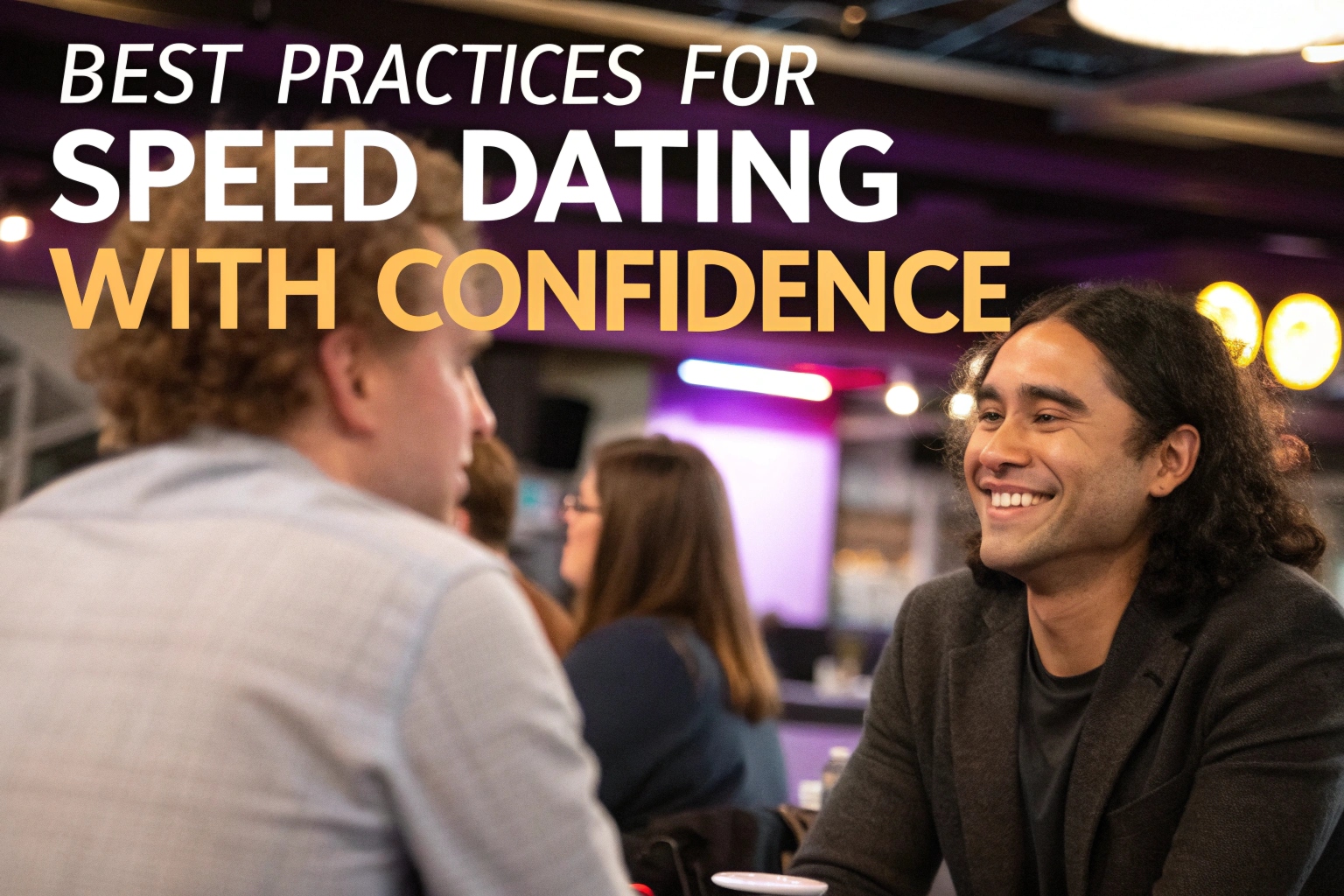
Have you ever wondered how to present the truest version of yourself in five minutes, without losing what feels honest or turning into someone you do not recognize?

Best Practices For Speed Dating With Confidence
You are about to enter a room full of strangers and small clocks, and the rhythm will be brisk. This article will hold your hand and your attention through the practicalities and the small humane things that make speed dating feel less like an audition and more like an opportunity to meet another human being.
Why speed dating can feel so intense
You may find the pace intoxicating and terrifying at once; five minutes can feel both like too little and like an eternity when nerves are present. Recognizing that intensity is the first step toward using it: it can sharpen who you are rather than flatten you into a rehearsed performance.
What this guide will give you
You will receive clear, actionable best practices that honor your feelings, your dignity, and your desire for connection. The tone is practical and kind, offering techniques you can try tomorrow as well as small shifts in thinking that change the whole experience.
Understanding the format and expectations
You will find that knowing the layout of an event reduces anxiety more than any pep talk. Familiarity with the format gives you small victories of control that build into larger confidence.
Typical structure of a speed dating event
Most events consist of a series of short one-on-one conversations, often five to seven minutes each, with a brief break between rounds. Organizers usually provide a bell or signal at the end of each round and a way to indicate mutual interest afterward.
What organizers expect from you
Organizers expect punctuality, respect for time, and adherence to any rules given up front. They also expect you to treat others with courtesy—this sets the tone for the whole room and makes the event easier for everyone.
What other participants tend to bring
Other participants usually arrive with a mix of hope and reservation, some rehearsed lines, and a variety of social skill levels. Recognizing this will help you be more compassionate toward yourself and others when conversations feel clumsy.
Preparing yourself the day before
Preparation is not only about clothes and directions; it is about arranging your inner life so that you can show up as yourself. A few small actions the day before will quiet your nerves enough that your personality can speak.
Mental rehearsal and intention setting
Before you sleep, think of one or two qualities you want to convey—warmth, curiosity, steadiness. Tell yourself that your job is not to win someone over but to be present and listen, which can be oddly liberating.
Practical logistics: time, route, and registration
Confirm the time, the address, and the sign-in process so you do not arrive flustered or late. Charge your phone, ensure you have cash or card for entry, and know where you will park or which train to take.
What to wear and why it matters
Choose clothing that makes you feel like yourself but slightly elevated for the occasion; a small boost in neatness signals respect for yourself and the other person. Comfort matters as much as appearance—if you are tugging at a shirt or wincing in shoes, your attention will be distracted.
Sleep, food, and hydration
Get a good night’s sleep if you can, eat a balanced meal before the event, and hydrate sensibly. Stomach discomfort or fatigue will make your patience thin and your smile less easy to find.
Managing nervousness and building calm
Nerves are not a failing; they are evidence that you care. Learning to work with them will let them become a useful energy rather than an obstacle.
Breathing techniques and short grounding exercises
You can steady your voice and slow your heart with a few mindful breaths: inhale for four counts, hold for four, exhale for six. Grounding exercises—pressing your feet into the floor, feeling a tabletop with your fingertips—bring you back into your body and away from anxious thought.
Reframing anxiety as excitement
Tell yourself that the racing pulse you feel is excitement, not panic; the physiology is the same and your interpretation shifts how you carry it. When you label arousal as positive, your posture and voice follow, and that outward change tends to reduce inward fear.
Small rituals that help you feel anchored
Bring a small object—a bracelet, a ring, a token in your pocket—that gives you permission to breathe and remember your intention. A tiny ritual like this can serve as an anchor in the middle of quick conversations.
Crafting your opening and first impressions
First impressions are made quickly but they are not irrevocable; they can be softened or strengthened by your presence. Thoughtful openings let you move into the conversation without a rush to impress.
The simplest, truest greeting
A warm greeting and your name are enough to begin. You do not need a line; your calm, clear voice and eye contact will carry more weight than any practiced joke.
What to say in the first thirty seconds
Use an observational opener about the event or a gentle question about the other person’s day. For example: “How did you find this venue?” or “What brought you here tonight?” These are unthreatening and invite a story rather than a yes/no answer.
The power of posture, eye contact, and smile
Your posture communicates your availability and interest; sit or stand with openness rather than rigidness. A genuine smile and steady eye contact make you more trustworthy, and they help your own brain feel kinder.
Conversation strategies that build connection
You will find that curiosity, restraint, and honesty are the three simple ingredients that create an engaging conversation. They are less flashy than clever lines but far more effective.
The art of asking open-ended questions
Open questions invite people to show themselves; they are the path to texture and nuance in a short time. Ask “What’s a day like for you?” or “What are you really enjoying these days?” and then listen for the detail you can react to.
How to reveal without oversharing
You can be honest without unloading your whole life. Offer a meaningful anecdote that shows who you are, then pause to let the other person respond; this keeps the conversation balanced and inviting.
Mirroring and reflective listening
Reflecting someone’s words back in a short summary signals that you heard them and that you care. Mirroring their emotional tone—if they speak softly, soften your voice slightly—creates rapport without manipulation.
Balancing questions with genuine comments
Don’t turn the conversation into an interrogation. Mix in statements about yourself that relate to what they said, so it feels like a dance rather than a Q&A.
Conversation starters that actually work
You might worry that every opening line has been used already; in truth, your voice and presence will revive a simple question. Choose prompts that lead to stories or opinions rather than lists.
Lightweight, story-inviting prompts
- “What’s a small thing that made you smile recently?”
- “What’s something you’re trying to learn or get better at?”
These invite narrative and warmth rather than rote answers.
Thought-provoking but comfortable prompts
- “If you could add one small ritual to your day, what would it be?”
- “What’s a book or film that changed how you see something?”
Such questions let you glimpse values without entering thin territory.
Playful, low-stakes prompts
- “What’s a guilty pleasure you refuse to feel guilty about?”
- “Do you have a comfort food that always works?”
These light questions loosen shoulders and can lead to laughter, which is deeply connective.
Managing time and transitions
Five minutes passes like a gust of wind, and part of your skill is knowing how to use it without forcing a conclusion. Graceful transitions are essential so that each conversation ends on a good note.
How to pace a five-minute conversation
Begin with a greeting and a brief warm-up question, move to one or two deeper questions or anecdotes, and end with a friendly summary. Aim for balance—if you take too much of the time, you’ll leave them with nothing to say and a subtle sense of pressure.
Closing a conversation politely in under a minute
When the bell approaches, summarize what you liked—“I loved hearing about your garden”—offer a friendly comment about your interaction—“I felt we got on well”—and then smile. These small acts leave the other person with warmth rather than confusion.
Handling awkward pauses and silences
Silence is not always a problem; it gives people space to think. If a pause grows long, you can use a gentle, clarifying question to reorient—“That was interesting, tell me more about…”—and allow the conversation to restart.
Nonverbal cues that signal confidence
Your body often speaks before your words do, and if you attend to it you can broadcast reassurance. Confidence is a soft muscle you can exercise through small, consistent practices.
Posture, hand gestures, and proxemics
An open posture, relaxed shoulders, and occasional hand gestures will make you appear engaged. Respect personal space while leaning slightly forward to signal interest, which calibrates closeness without invading comfort.
Vocal tone and speech pacing
Speak at a pace that is steady, with occasional variation to show emphasis and warmth. Lowering your pitch slightly can make you sound more grounded, but the most important thing is clarity and presence.
Reading the other person’s nonverbal signals
Pay attention to their eye contact, facial expressions, and body orientation. If they lean away or cross arms, soften your approach; if they move closer and make more eye contact, you can match their warmth.
Handling difficult topics gracefully
There will be moments when politics, past relationships, or religion surface. How you manage these urns of heat can tell a lot about your maturity and temperament.
Steering away from polarizing debates
If a topic feels like a trap, you can gently redirect: “I prefer talking about the things that light me up—what about you?” This avoids awkwardness without dismissing the other person’s perspective.
If a topic becomes too personal or uncomfortable
Allow yourself to set a boundary: “I’m not comfortable discussing that much tonight.” You do not owe an explanation; you do owe courtesy. Saying it kindly preserves both.
Handling red flags without confrontation
If someone behaves rudely or crosses a boundary, remove yourself politely and decisively. You can say, “I don’t feel comfortable continuing this conversation,” and then excuse yourself; your safety and dignity matter.

After the event: follow-ups and reflection
What you do after the event matters equally to how you behaved during it. Following up well and reflecting honestly will improve your next experience.
How to decide who to contact
Think about who left you feeling curious or comfortable, not simply who you found attractive. Interest that blends warmth with curiosity is the best predictor of a good next conversation.
Crafting a follow-up message that feels human
Mention something specific from your interaction—“I keep thinking about that recipe you mentioned”—and suggest a low-pressure next step like coffee or a walk. Be brief, kind, and clear about what you want.
Learning from the experience without self-criticism
Afterward, jot down two things you did well and one small thing you want to try next time. This practice keeps your learning gentle and focused rather than punitive.
Managing rejection and missed matches
You will not like every answer, and not every match will be mutual; this is part of the social economy of dating. How you process those moments determines how quickly you can try again.
Making space for disappointment
Allow yourself a moment to feel disappointed; it is human and it does not mean you are flawed. Name the feeling briefly and then let it move through you rather than become the story you tell yourself.
Reframing “no” as data, not destiny
A rejection is simply information about fit, timing, or circumstance—it is not a verdict on your worth. Using rejection as a neutral signal helps you adjust strategy without internalizing shame.
Practical tips for emotional recovery
Talk to a friend, go for a walk, or return to a comforting ritual to reset your emotional baseline. Small acts of kindness toward yourself will restore your resilience for the next event.
Confidence-building exercises to practice
Confidence grows like a plant—it needs small, repeated care. These exercises are practical and short, and you can do them in days or weeks before an event.
Short daily practices (5–10 minutes)
Practice speaking for one minute about something you love in front of a mirror or record yourself. Small, regular rehearsals reduce fear and make your voice steadier.
Weekly social experiments
Attend a workshop, a talk, or any gathering where you will talk briefly to a few people and leave. Each small success accumulates and rewrites the story you tell about your social competence.
Longer-term habits that increase resilience
Develop a habit of journaling about your social experiences and noting what you learn. Over months, you will see patterns that reveal strengths and areas for gentle growth.
Common mistakes and how to avoid them
You will make mistakes; everyone does. Recognizing common traps helps you spot them in the moment and correct course with minimal fuss.
Table: Common pitfalls and practical fixes
| Mistake | Why it hurts | Practical fix |
|---|---|---|
| Talking too much about yourself | Leaves the other person sidelined and uninterested | Use a timer in your head: one minute about you, one minute about them |
| Over-rehearsed lines | Sounds inauthentic and has no room for real connection | Practice general themes rather than fixed scripts |
| Avoiding eye contact | Creates distance and makes you look insecure | Aim for soft eye contact, not a hard stare; look away naturally now and then |
| Trying to be perfect | Increases anxiety and reduces natural warmth | Embrace small imperfections as signs of authenticity |
| Forgetting to ask follow-ups | Kills momentum and suggests lack of curiosity | After a fact, ask “What was that like?” to invite depth |
Every one of these fixes is simple, and their power lies in repetition rather than perfection.
Practical safety and etiquette
Your safety and comfort are paramount, and social grace makes the event pleasant for everyone. A few clear rules preserve both.
Table: Etiquette and safety checklist
| Item | Why it matters | What you do |
|---|---|---|
| Punctuality | Shows respect for others’ time | Arrive 10–15 minutes early |
| Consent for physical contact | Protects boundaries | Keep initial interactions touch-free unless there’s clear comfort |
| Discreet privacy | Respect for other participants | Do not take photos or share personal contact info without consent |
| Reporting concerns | Keeps the event safe | Alert organizers if someone acts aggressively or violates rules |
A handful of considerate acts changes the room’s atmosphere for the better.
Tailoring your approach for different kinds of events
Not all speed dating events are identical; some are themed, some are age-specific, and some are professional mixers with a romantic undertone. You can adjust without changing who you are.
Theme events and niche groups
If the event has a theme—books, hiking, film—use that as a natural opener and shared territory. Your knowledge need not be encyclopedic; curiosity is enough.
Age-focused or interest-specific events
In age-specific or interest-specific events you will often find a shared reference point that eases conversation. Use that common ground to ask about small, meaningful habits rather than generic biographical questions.
Online speed dating variants
Online formats retain the same need for presence but add the elements of a camera and screen. Make sure your camera angle is flattering and your background is simple, and treat the virtual format with the same courtesy as in-person events.
What to practice the night before and the morning of
Small rituals before the event will carry you through conversation fatigue and help you sustain warmth and clarity. They are simple, but their accumulation is significant.
Night-before checklist
Pack a small kit—water, mints, a spare pen, and a notebook—and set out your outfit. Review one or two conversation prompts and then sleep; mental review is more useful than frantic rehearsal.
Morning-of checklist
Have a balanced breakfast, dress with intention, and give yourself fifteen minutes of quiet to center your thoughts. If you are prone to anxiety, do a short breathing practice or a brisk walk to release energy.
When things go unexpectedly well (or poorly)
Speed dating is unpredictable: sometimes you meet someone you want to know more about, sometimes the hour feels disappointing. Both matter and both teach you something.
If you find a strong connection
Savor it, but do not accelerate; suggest a reasonable next step like coffee or a longer conversation later in the week. Keep your follow-up grounded and specific so the momentum becomes something real.
If the night feels flat
Treat the evening as research: you learned what feels right and what doesn’t. Sleep on it, write down one or two takeaways, and consider a small change for the next event.
Final thoughts and a quiet encouragement
You will bring forward the same heartfelt yearning as everyone else in the room: the desire for companionship, recognition, and ease. Speed dating is a tool one of many that gives you a chance to meet people quickly and kindly, and you can do it with integrity and with tenderness for yourself.
Trust the ordinary things: breathing, listening, telling small truths, and being curious. The rest luck, timing, chemistry are elements you cannot control, and your courage is shown less by outcomes than by the gentleness you extend to yourself while trying.
If you take only one thing from this guide, let it be this: show up as yourself with small intention and compassionate curiosity, and you will find that confidence grows not by force but by consistent, thoughtful practice.