
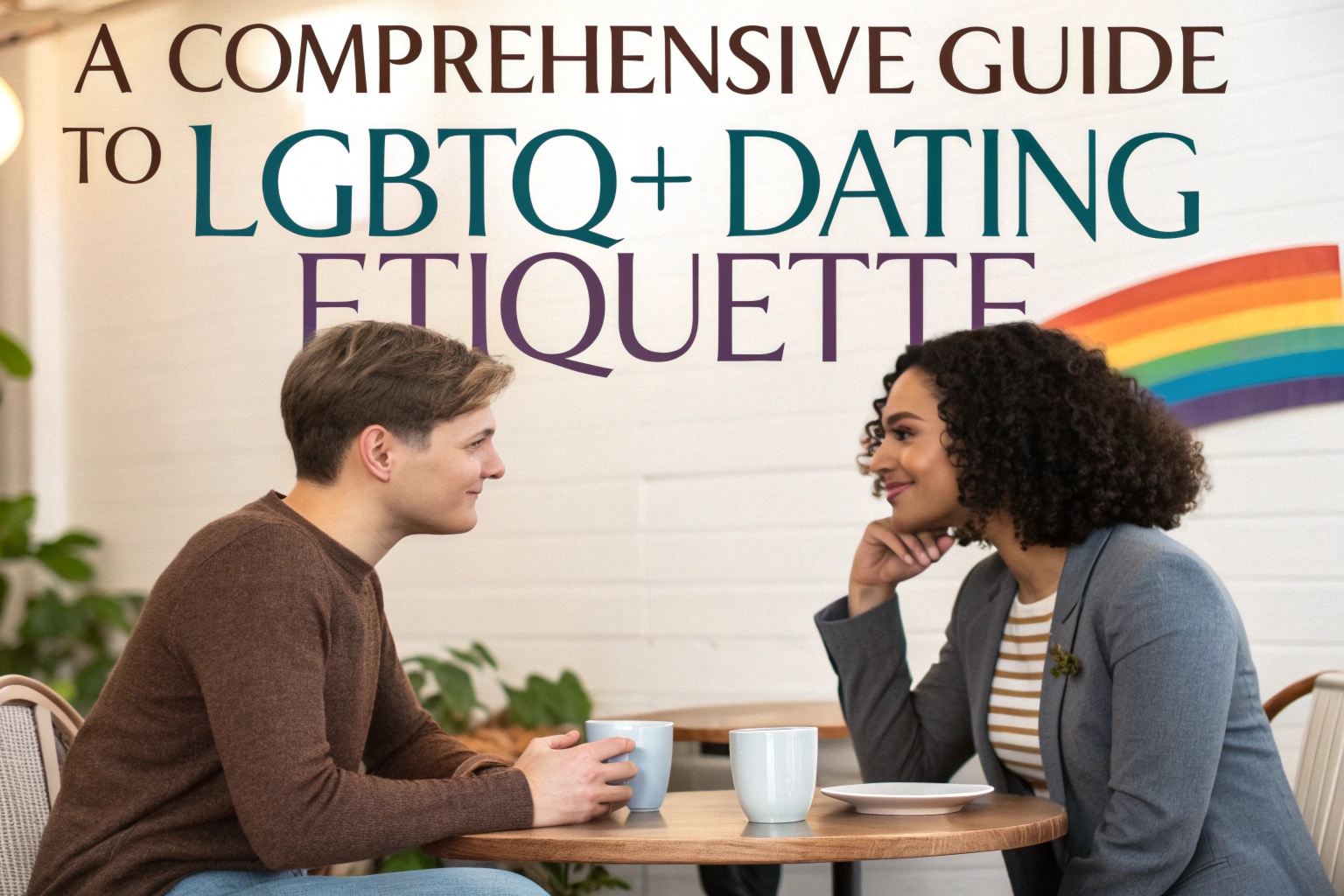
Have you ever felt both excited and a little uncertain about what counts as polite, respectful, or wise when you start dating someone in the LGBTQ+ community?
You are not alone in that feeling. Dating always carries its own soft, messy grammar of manners, and when gender, sexual orientation, history, and public safety are in play, the rules feel like they shift under your feet. This guide is written to steady those steps practical, respectful, and attentive—so you can move forward with clarity, warmth, and fewer awkward missteps.
Understanding LGBTQ+ Dating Etiquette
Etiquette in LGBTQ+ dating is not a fixed list of rules but a set of shared practices that emphasize respect, safety, and honest communication. As you date, you will meet people with different histories and needs; etiquette helps you honor those differences.
Be mindful that courtesy in dating often looks like small things: asking for pronouns, listening when someone talks about their boundaries, or not presuming romantic or sexual intent. These habits build trust and show you care about the person across from you.
The importance of respect and consent
Respect begins with believing people when they name themselves, and continuing through to the ways you speak and touch. Consent is the backbone of respectful interaction it is ongoing, enthusiastic, and can change at any moment.
If you practice asking, checking in, and backing off when asked, you’re doing more than following etiquette; you’re making dating safer and more pleasant for everyone involved.
Recognizing diversity within the LGBTQ+ community
“LGBTQ+” is an umbrella term that covers a wide variety of identities, attractions, and relationship styles. You will meet people whose lives, expectations, and boundaries differ from your own and from one another.
Appreciating this diversity means keeping curiosity gentle and questions respectful. When you don’t know something, ask with humility; when you are told something personal, accept it at face value.
Communication Basics
Clear communication is the most useful tool in your kit. It keeps misunderstandings small and manageable and helps you both understand whether you want more time together.
Practice straightforward language. If you feel awkward, say so; awkward honesty can be endearing and often reduces friction.
Pronouns and names
Asking for and using correct names and pronouns signals basic respect. If you make a mistake, correct yourself briefly and move on; long apologies can make the other person feel like the caretaker of your comfort.
If you’re unsure how to ask, a simple “What pronouns do you use?” or introducing your own pronouns first often works well.
Pronouns and example phrases table
| Pronouns | Example introduction | Correcting yourself |
|---|---|---|
| She/Her | “I’m Maria, she/her.” | “She — sorry, I meant she.” |
| He/Him | “I’m Alex, he/him.” | “He — sorry, I said she by mistake.” |
| They/Them | “I’m Sam, they/them.” | “They — my mistake.” |
| Mixture (xe/ze, etc.) | “I’m Nico, xe/xem.” | “Xem — sorry, I misread.” |
Coming out, outing, and privacy
You should never out someone to others without explicit permission. Outing can have real consequences, from emotional harm to safety risks at home or work. You are not being disloyal by maintaining someone’s privacy; you are protecting them.
If someone mentions their out status in passing, respect the context. If you’re unsure whether a partner is comfortable being seen together in public or brought to family events, ask privately.
Expressing interest and flirting
Flirting in LGBTQ+ spaces can be playful, tentative, and full of code-switching; people use many cues to signal interest. Use straightforward compliments when possible, and be receptive to reciprocal signals.
If you’re interested, name it gently: “I’d love to get to know you better” or “Would you like to go out sometime?” Keep the tone warm rather than performative.
Sample flirt/interest messages table
| Situation | Gentle opener |
|---|---|
| After chatting briefly at an event | “I like talking with you. Want coffee sometime?” |
| Messaging on an app | “Your photos make me want to hear the stories behind them.” |
| Complimenting style | “I love your jacket — it suits you. Where did you find it?” |
First Dates and Early Stages
First dates are experimental. They’re not auditions or destiny makers; they are small investigations of compatibility.
Plan for comfort and safety: pick public spaces, let someone know where you’ll be, and ensure both of you have an easy exit if the chemistry isn’t there.
Planning the date
Choose settings that encourage conversation—cafes, walks, low-key museums. If either of you has accessibility needs, factor them in when selecting a place.
Offer options and listen to preferences. You can say, “Would you prefer a quieter place or someplace more lively?” This signals that you care about the other person’s comfort.
First-date safety checklist table
| Question to consider | Why it matters |
|---|---|
| Is the venue public and well-lit? | Public places reduce risk and feel safer. |
| Can the venue accommodate any mobility or sensory needs? | Access ensures both of you are comfortable. |
| Have you shared basic location info with a friend? | Safety backup if plans go awry. |
| Do you have your own transportation or an easy way to leave? | Ensures autonomy for both parties. |
Conversation topics and questions to avoid
Good conversation invites curiosity without being invasive. Ask about recent books, favourite meals, and weekend habits. Avoid pressing questions about family trauma, past relationships, or surgical histories.
Some questions can unintentionally press for private information; when in doubt, let the person volunteer personal details on their own timeline.
Conversation do/don’t table
| Good topics | Topics to avoid |
|---|---|
| Hobbies, pets, travel | Invasive medical questions |
| Work and ambitions | Detailed questions about previous partners |
| Food, films, music | “When did you realize you were X?” (pressuring coming out story) |
Physical contact and consent
If you want to touch — a hug, a hand on the arm — ask or read clear signals. You can frame a request lightly: “Is it okay if I hold your hand?” That phrasing gives the other person an easy way to consent or decline without awkwardness.
Remember that consent can change in the course of a date. Check in before escalating physical contact.
Dating Apps and Online Etiquette
Dating apps are full of possibility and ghosts. You can craft a profile that’s honest and inviting without oversharing.
Online interactions should be as courteous as in-person ones. If you’re not interested, a brief, kind message beats silence.
Profiles and honesty
Your profile should reflect who you are and what you want. If a relationship structure, like polyamory or non-monogamy, is important to you, say so upfront to save mutual time and emotional labor.
Avoid ambiguous labels if you mean something specific. Clearness attracts compatible people and prevents misunderstandings.
Messaging etiquette
Lead with a comment about something specific in their profile. Avoid generic openers that could be sent to anyone. If someone doesn’t answer, resist escalation: one follow-up is okay; repeated messages can feel like pressure.
If you start talking about sex, use respectful language and consent-driven phrasing. Make room for silence as well; not every match will turn into conversation.
Sample openers table
| Profile cue | Example opener |
|---|---|
| Travel photos | “That canyon shot is amazing — what was the highlight of that trip?” |
| Book mention | “You mentioned Murakami — which of his books do you keep returning to?” |
| Dog picture | “Your dog looks like a good companion. Is it a rescue?” |
Ghosting, breadcrumbing, and ending things online
If you decide to stop seeing someone, tell them clearly if you can. “I don’t feel we’re a match, but I enjoyed meeting you” is concise and humane. Ghosting costs the other person dignity; a brief closure conversation preserves it.
Breadcrumbing — keeping someone interested with sporadic messages — is emotionally unfair. If you want to keep a casual connection, state it plainly.
Labels, Identity, and Language
Labels are tools for self-description, not iron cages. They help you and your partner understand attraction, orientation, and identity, but they are not obligations.
When in doubt, listen more than you speak. Let people self-describe and use the language they choose.
Respecting labels and pronouns
If someone uses a label or pronoun different from your expectation, accept it without debate. Corrections are not invitations to question their identity; they are requests for simple adjustments in your language.
If you’re learning new terms, be patient with yourself and prioritize the other person’s comfort over your need to be “perfect” right away.
When to ask about identity
You don’t need to ask about someone’s entire identity history on a first date. Save deeper questions for a place of trust. If identity affects your relationship decisions — for example, if you prefer certain dynamics — explain why you’re asking and give them room to decline.
Asking respectfully can sound like: “I’m curious about what pronouns you use and how you like to describe your orientation, but only if you’re comfortable sharing.”
Nonbinary, trans, intersex considerations
Education about trans and nonbinary experiences is respectful, but it’s not the responsibility of every trans or nonbinary person you date to teach you. Use resources to learn basics and ask gentle, non-invasive questions if you need clarification for the relationship.
If a partner brings up a medical history or transition, treat it as private information and respond with care, not curiosity.

Sex, Safer Sex, and Intimacy
Sex and intimacy are deeply personal and often complicated by public health considerations and past experiences. The best approach is honest communication and mutual care.
Create a space where both of you feel comfortable naming desires and boundaries without shame.
Consent and enthusiastic consent
Consent is not a checkbox. It is an ongoing, mutual, and enthusiastic agreement to specific activities. You can ask, “Are you into this?” or “Do you want to keep going?” and take “no” or hesitation as an answer.
Enthusiastic consent also means being attuned to nonverbal cues and being ready to slow down if tension or uncertainty appears.
Safer sex practices and disclosure
Safer sex includes condom use, dental dams, PrEP, regular STI testing, and discussing partners outside the relationship. Be transparent about your practices and ask about theirs without assuming guilt or innocence.
Testing is part of care for yourself and your partners. You can frame the conversation as mutual: “I get tested regularly, and I’m happy to share my results. Do you do the same?”
STI testing frequency and resources table
| Situation | Recommended testing frequency | Additional notes |
|---|---|---|
| New partner, sex with new people | Test 1–3 months after new exposure | Combine tests with partner conversations |
| On PrEP | Every 3 months | Also test kidneys periodically per guidelines |
| Monogamous partnership | Baseline test, then as agreed | Consider testing if partnership status changes |
| Symptoms or exposure | Test immediately and follow provider advice | Seek care promptly |
Discussing STI status and PrEP
Approach conversations about STI status like any medical conversation: factual, nonjudgmental, and confidential. Offering to share testing history and asking about their approach reduces stigma and builds trust.
If you or your partner are on PrEP, discuss adherence and other protective strategies. PrEP is an important tool for many people; your willingness to talk about it calmly shows care.
Boundaries, Negotiation, and Healthy Dynamics
Boundaries are how you tell someone what you need to be safe and content. You are not being difficult when you set them; you are being responsible for your wellbeing.
Negotiation is part of healthy relationships. You can say what you want and ask what they want, and find a compromise that feels equitable.
Establishing boundaries early
Bring up key boundaries early in the relationship: privacy, time commitments, sexual limits, and how you prefer to communicate about plans. Early clarity prevents resentments.
You can say, “I like a lot of alone time on weekends” or “I prefer not to talk about my family details yet.” Simple statements set expectations.
Negotiating monogamy, polyamory, and agreements
Different relationship structures require different kinds of negotiation and documentation. If you’re considering polyamory, ethical non-monogamy, or open relationships, be explicit about rules around time, protections, and emotional labor.
A table comparing relationship structures
| Structure | Typical features | Communication needs |
|---|---|---|
| Monogamy | Exclusive romantic/sexual relationship | Boundaries about fidelity, privacy |
| Open relationship | Sexual freedom with outside partners | Clear sexual health practices, time rules |
| Polyamory | Multiple emotional/romantic relationships | High transparency, scheduling, jealousy work |
| Situationship | Casual, undefined romantic contact | Clarify expectations to prevent hurt |
Recognizing and addressing red flags
Red flags include repeated boundary violations, pressuring for sex, gaslighting, ignoring requests for clarity, or controlling behavior. If you notice patterns that make you uncomfortable, trust your feelings.
Addressing red flags can be direct: “When you do X, I feel Y. Can we change that?” If the behavior continues, you may need to step away.
Family, Community, and Public Affection
Family dynamics and community expectations affect how you navigate relationships. Some people have chosen families; others are building their community around chosen friends.
Consider the other person’s context before deciding how public or private your relationship should be.
Introducing partners to family
Ask your partner how they feel about family meetups. Some families are loving and affirming; others are complicated and potentially harmful. You should plan introductions only with clear consent and a sense of safety.
If you are bringing someone into a difficult family situation, prepare a private plan: what topics to avoid, safe exit strategies, and signals to pause the outing.
PDA and safety in public
Public displays of affection are easy in some spaces and risky in others. Check in: “Are you comfortable kissing here?” or “Do you want to hold hands?” Doing so respects the other person’s experience of safety.
When you travel to unfamiliar or less-accepting places, adjust public intimacy to protect both of you.
Navigating community expectations
Community spaces can be supportive but also policing; you may encounter attitudes about who is “authentically” queer or right ways to date. Don’t let external expectations define your relationship.
Find people who match your ethic of care and respect, and who help you grow rather than shame you.
Intersectionality and Cultural Sensitivity
Your identity rarely exists in isolation. Race, class, religion, disability, and gender all intersect to shape how you move through dating spaces. Being sensitive to those intersections helps you be a better partner.
Learn about the particular pressures others might face, and do not assume your experience is universal.
Race, religion, and disability
If you’re dating across differences—say, racial or religious lines—ask about needs and histories that may affect the relationship. Don’t fetishize difference; treat it as part of a person’s full life.
If a partner has a disability, ask how to be supportive rather than making assumptions about capacity or desire.
Socioeconomic differences
Money influences dating: who pays, what activities are feasible, and how time is spent. Be open about financial differences and find low-pressure ways to share experiences.
Saying “I’d like to take you out, and here are some low-cost options” shows thoughtfulness.
Age gaps and power dynamics
Age and experience can create imbalanced power. Be alert to how authority, financial stability, or social capital may affect consent and decision-making. When difference is large, talk explicitly about expectations and ensure consent comes from an informed, autonomous place.
Conflict Resolution and Breakups
Disagreements are normal; the important part is how you handle them. Aim for curiosity rather than accusation, and seek resolution rather than victory.
If the relationship is ending, be thoughtful about how to give closure and respect each person’s need for space.
Communicating during conflict
Use “I” statements and focus on specific behaviors rather than character attacks. For example: “I felt hurt when plans changed without asking” instead of “You never consider me.”
If conversations escalate, it’s okay to pause and return when both of you are calmer.
Breaking up with care
If you need to break up, do so in a manner consistent with the relationship’s intimacy. In-person is preferable for ongoing partners; a thoughtful message may be appropriate for brief connections.
Avoid blame-heavy language. You can say: “I think we want different things right now; I don’t see this continuing, and I want to be honest so we can both move forward.”
Maintaining boundaries after breakups
After a breakup, set clear boundaries about communication, shared spaces, and mutual friends. If you need time apart, state it: “I need a month without contact.” Respect each other’s wishes to heal.
If you share social circles, agree on how to navigate mutual events beforehand.
Helpful Scripts and Phrases
Sometimes a few sentences can prevent a lot of confusion. Keep scripted language handy for common situations and adapt it to your voice.
These lines are short, kind, and effective.
Helpful scripts table
| Situation | Script |
|---|---|
| Correcting pronoun use | “Sorry, I meant they/them.” |
| Asking for consent | “Would you like to kiss me?” |
| Declining sex politely | “I’m flattered, but I’m not comfortable with that right now.” |
| Ending a date | “I had a nice time, but I don’t think we’re a match. Thanks for tonight.” |
| Coming out to someone | “I want to tell you something about me: I’m [identity]. I trust you with this.” |
| Being asked invasive medical questions | “I’m not comfortable discussing that; I hope you understand.” |
Practical Resources and Next Steps
If you want to learn more, there are many organizations, books, and tools that offer deeper education, testing, and community. Seeking information on your own shows maturity and respect for your partners.
Consider local LGBTQ+ centers, sexual health clinics, books about queer histories, and therapists experienced in queer issues.
Resource suggestions table
| Resource type | Example actions |
|---|---|
| STI testing clinics | Locate a clinic via local health department or Planned Parenthood |
| PrEP providers | Use national PrEP locator tools to find prescribers |
| Books | Look for memoirs and contemporary fiction by LGBTQ+ authors |
| Therapy | Seek therapists who list LGBTQ+ competency, ask about experience beforehand |
| Community centers | Check for local events, support groups, and workshops |
Books and media suggestions (brief):
- Memoirs and novels that portray queer life with nuance.
- Guides on safer sex and PrEP from reputable health organizations.
- Articles and essays about intersectionality, trans experiences, and polyamory for nuanced understanding.
If you are unsure where to start, call your local health clinic and ask about testing and sexual health resources. If mental health or trauma surfaces in dating, a queer-competent therapist can help you process and set boundaries.
Closing Thoughts
Dating is, at its best, an ordinary pilgrimage of getting to know someone: sharing meals, making plans, discovering small details that make each other laugh. When you date within LGBTQ+ communities, you bring with you histories that call for attention, care, and sometimes protection. Etiquette in this context is less about rigid rules and more about practical kindness: accurate names, consented intimacy, protective privacy, and honest talk.
You will make mistakes; you will also make moments that feel true and generous. When you err, correct, listen, and continue. When you flourish, celebrate small successes—the first comfortable silence, the thoughtful question, the considerate text. Over time, these habits become the architecture of loving, respectful connections that keep people safe and seen.
If you keep respect and curiosity at the center of your choices, you’ll find that dating becomes less like navigating a minefield and more like building a small garden requiring patience, consistent tending, and a willingness to learn from each season.