
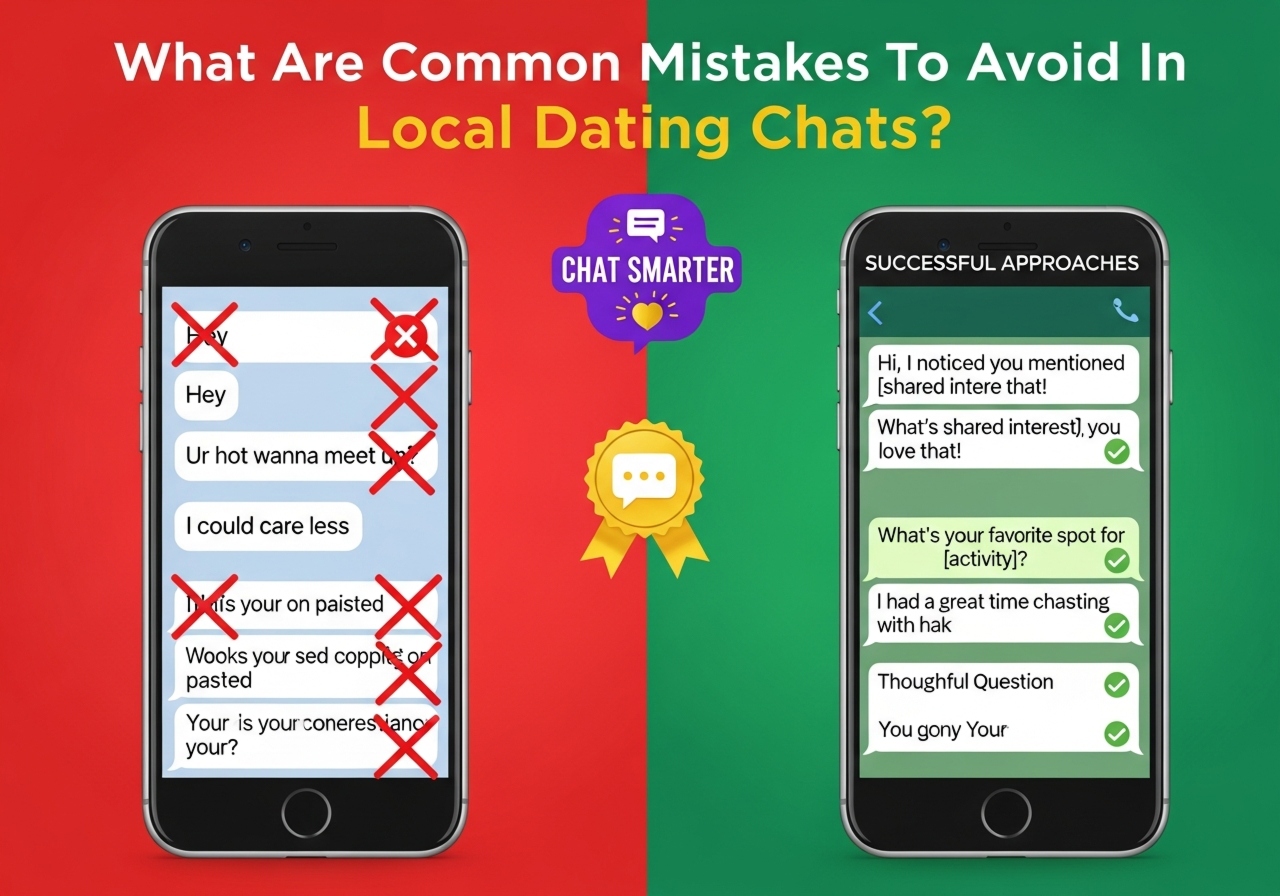
Are you making avoidable mistakes that keep your local dating chats from moving forward?

What Are Common Mistakes To Avoid In Local Dating Chats?
You want local dating chats to feel natural, safe, and productive so you can meet genuine people nearby. This article walks through common mistakes you might be making, explains why they hurt your chances, and gives clear, friendly fixes you can use right away.
Why local dating chats matter
Local chats are your chance to connect with people who are actually nearby, which makes meeting up easier and more realistic. They also reflect how you communicate in person, so improving these chats improves your real-life dating too.
Big-picture mistakes to watch for
Many missteps happen repeatedly because they feel natural or convenient, like copy-pasting messages or oversharing. Recognizing the patterns is the first step to changing them and getting better responses.
Mistake 1 — Using generic copy-paste openers
You might be tempted to reuse the same short, generic line on dozens of local matches because it’s quick. That approach usually makes the recipient feel like another number, not a person, and it lowers your reply rate.
Why it hurts: Generic messages don’t show that you read the profile or care about common ground.
How to fix it: Personalize each opener with one detail from their profile or a local reference that shows you’re nearby and attentive.
Example of bad vs better:
- Bad: “Sup?”
- Better: “I noticed you mentioned the farmers market — what’s your favorite stall around here?”
Mistake 2 — Moving too fast to meet or exchange contact info
Wanting to meet in person quickly often comes from genuine interest, but asking for a meet-up or phone number right away can feel pushy. You need to build a little rapport first so the other person feels comfortable and safe.
Why it hurts: People prioritize safety and may refuse to meet or share info without basic trust.
How to fix it: Spend a few messages building connection, reference a shared interest, then suggest a low-pressure public meet if both seem comfortable.
Suggested phrasing: “I’m enjoying our chatting — would you be open to grabbing coffee at [well-known local spot] sometime this week?”
Mistake 3 — Oversharing personal details too soon
You might think being open is a shortcut to connection, but sharing details like work location, full name, or finances early on can alarm someone. Protecting personal details is essential for both parties.
Why it hurts: Oversharing creates safety concerns and can appear naive.
How to fix it: Keep early chat focused on interests and values. Share personal details gradually after trust is built.
Rule of thumb: Don’t give exact daily routines, work addresses, or home addresses until you’ve met in a safe public place.
Mistake 4 — Sending explicit or sexual messages early
Flirty messages can be fine when mutual, but explicit sexual content or heavy innuendo right away often backfires. Unless the tone is clearly reciprocated, it’s better to be respectful and tone down sexual content.
Why it hurts: It can make people uncomfortable and cause immediate rejection or blocking.
How to fix it: Gauge tone and interest first, and use respectful flirtation that leaves room for consent and reciprocation.
If unsure, follow the other person’s lead and avoid graphic content until you’re certain they welcome that direction.
Mistake 5 — Ignoring profile details or local cues
Profiles often include hints about hobbies, favorite spots, and personality. Ignoring those cues makes your messages feel generic and shows you didn’t pay attention.
Why it hurts: You miss easy conversational hooks and reduce your chance of sparking interest.
How to fix it: Comment on one or two profile items or local references. Mention a mutual favorite local café, band, or activity.
Quick opener template: “I see you love [interest] — I went to [local place] for that last weekend. What’s your favorite spot around here?”
Mistake 6 — Poor grammar, punctuation, and spelling
You might think slang and shortcuts look casual, but too many typos or careless grammar can make you seem inattentive. Clear writing shows respect for the other person’s time and makes your message easier to respond to.
Why it hurts: Messages that are hard to read or sloppy often get ignored.
How to fix it: Take a second to proofread, use capitalization and punctuation, and avoid text-speak when starting a conversation.
A simple habit: Read your message out loud before sending to catch mistakes and awkward phrasing.
Mistake 7 — Being too negative or complaining a lot
Leading with complaints about dating, life, or past relationships can be an emotional red flag. Even if you’re venting, negativity tends to repel people early in conversation.
Why it hurts: Negative energy lowers the other person’s enthusiasm and trust.
How to fix it: Keep early messages upbeat and curiosity-driven. If you need to share frustrations, reserve them for later when you’ve built rapport.
Try this instead: “I’ve had some weird dating stories, but I’m more into hearing what makes someone laugh. What’s a small thing that always makes your day better?”
Mistake 8 — Not asking thoughtful questions
If your messages are all about you, the other person can feel like they’re on display. Balanced conversations include open-ended questions that invite storytelling and reveal personality.
Why it hurts: Monologues kill momentum and prevent mutual exchange.
How to fix it: Ask one or two open-ended questions per few messages and respond to answers with follow-ups.
Good examples: “What’s the best local hike you’ve done?” or “How did you decide to get into [their hobby]?”
Mistake 9 — Overuse or misuse of emojis
You might feel that emojis make messages friendly, but overusing them or using ambiguous emojis can confuse tone. They’re useful when matching the other person’s emoji style, but worry about miscommunication.
Why it hurts: Emojis can make you seem immature or unclear if used excessively.
How to fix it: Mirror the other person’s emoji usage and prefer words for tone where nuance matters.
If they use a couple of heart-eyes or smileys, respond in kind. If they use no emojis, keep text straightforward.
Mistake 10 — Using sarcasm without context
Sarcasm can be funny in person when tone and facial cues are present. In text, sarcasm often appears rude or confusing, especially early on.
Why it hurts: It’s easy to be misunderstood and create friction.
How to fix it: Save sarcasm for after you’ve established a rapport, or add clear signals (playful emojis or follow-up clarifications).
If you’re not sure they’ll get your joke, try a gentler, clearer humorous approach.
Mistake 11 — Getting defensive or argumentative early
If the other person shares a different opinion, it’s tempting to argue to prove your point. Starting off conversational exchanges with debate-like energy makes dating chats feel stressful.
Why it hurts: Arguing early reduces warmth and makes people cautious about continuing.
How to fix it: Practice curiosity and respectful disagreement. Ask questions and acknowledge differences without escalating.
Try this: “That’s interesting — I hadn’t thought of it that way. What led you to that view?”
Mistake 12 — Ghosting and inconsistent messaging
You may disappear when life gets busy, or you might ghost someone when you lose interest. Both are common but hurtful behaviors that reduce your chances of healthy connections.
Why it hurts: Ghosting signals poor communication skills and creates hurt for the other person.
How to fix it: If you need space, send a brief courteous message: “I’ve been swamped this week. I’m interested but need a few days to reply properly.”
Being clear and kind preserves respect even when you’re stepping back.
Mistake 13 — Rushing intimacy or private photos
Requesting intimate photos or sending them before consent is given is a violation of trust and boundaries. It’s important to prioritize consent and mutual comfort.
Why it hurts: It creates discomfort and can lead to immediate blocking or reporting.
How to fix it: Never request explicit content and avoid sending anything sexual unless you have mutual, explicit consent.
If the conversation turns intimate, check in often and make consent a clear verbal step.
Mistake 14 — Not recognizing scams or fake profiles
Scammers often target local apps to create fraudulent connections or to manipulate. It’s essential to spot red flags early so you don’t waste time or compromise your safety.
Why it hurts: Scams can cost emotional, financial, and privacy damages.
How to fix it: Look for too-good-to-be-true profiles, poor grammar combined with heavy compliments, or requests for money. Verify social profiles and suggest a short video call if you’re unsure.
Red flags table
| Red flag | Why it’s suspicious | What to do |
|---|---|---|
| Requests for money or gifts | Scammers aim for financial gain | Stop contact and report the profile |
| Quick declarations of love | Pushes for emotional control | Slow the conversation; verify identity |
| Refusal to video call or meet locally | Hides true identity | Ask for a short video call or decline |
| Profiles with few photos or repeated stock images | Could be fake or stolen | Do reverse image search, report if duplicated |
Mistake 15 — Failing to confirm practical details for local meetups
If you agree to meet, vague planning can lead to no-shows or awkward timing. Clear details make both people comfortable and reduce misunderstandings.
Why it hurts: Ambiguity increases anxiety and the chance of plans falling through.
How to fix it: Confirm time, specific public location, and a rough plan. Use a named café or landmark and check transportation options.
Example confirmation: “Great — coffee at Bluebird Café at 3 PM on Saturday. I’ll be near the corner by the mural. Does that work for you?”
Mistake 16 — Being overly self-deprecating or fishing for compliments
Self-deprecation can seem humble, but constant fishing for reassurance makes you appear insecure. That tone adds emotional labor to the conversation.
Why it hurts: It makes the other person feel responsible for your mood and less likely to engage.
How to fix it: Be honest but balanced. Share positive aspects about yourself and ask about theirs.
If you want reassurance, ask for it directly but sparingly: “I’m a bit nervous about this — any tips for a relaxed first chat?”
Mistake 17 — Relying on voice notes or long audio messages incorrectly
Voice notes can convey warmth, but long or unexpected recordings are burdensome to listen to. Not everyone is comfortable with audio, especially early on.
Why it hurts: Long voice notes are time-consuming and hard to skim, which can delay replies.
How to fix it: Use short voice notes (15–30 seconds) and ask if they prefer audio or text. If you’re sending a story, summarize in text and offer an audio option.
Good practice: “Would you prefer a quick voice note or text?”
Mistake 18 — Bringing up heavy topics too early
Topics like major family drama, legal issues, or recent breakups can be important, but bringing them up immediately can be overwhelming. Early chats work better with lighter, engaging topics.
Why it hurts: Heavy emotional content can make the other person feel like a therapist rather than a date.
How to fix it: Save deeper conversations for when you’ve both moved past initial rapport and are comfortable.
Transition phrase: “We can share more about that later, but I’d love to hear about your favorite weekend routine first.”
Mistake 19 — Not adapting to local cultural norms
Local dating cultures vary widely — from texting frequency to what counts as polite behavior. Ignoring these norms can lead to misunderstandings.
Why it hurts: You might unintentionally offend or seem oblivious to acceptable behavior.
How to fix it: Pay attention to local dating etiquette, ask gentle questions about preferences, and mirror polite conventions.
If unsure, ask: “Is it common here to text the day before a date, or do people usually confirm the same day?”
Mistake 20 — Obsessing over response time
You may check your phone repeatedly and feel anxious when replies aren’t immediate, which can tempt you to send follow-ups too quickly. This creates pressure for both of you.
Why it hurts: Fast, repeated messages can come off as clingy or impatient.
How to fix it: Give people time to respond and limit follow-ups to one polite message if there’s been no reply in a reasonable window.
Suggested cadence: Wait 24–48 hours before a polite follow-up like, “Just checking if you saw my message — no rush.”
Mistake 21 — Being vague about your intentions
If you’re looking for something casual or serious, burying your intentions causes mismatches later. Clear, respectful communication saves time and prevents hurt feelings.
Why it hurts: Misaligned expectations cause frustration down the line.
How to fix it: Share your dating goals early in a straightforward, nonjudgmental way.
Sample language: “I’m enjoying getting to know people locally and am open to something casual that could become more if there’s a connection. How about you?”
Mistake 22 — Overemphasizing appearance or physical metrics
Focusing too much on looks, body details, or superficial comparisons reduces the chance of deeper connection. It can make the other person feel objectified.
Why it hurts: It’s shallow and can trigger insecurity.
How to fix it: Compliment personality, interests, or effort. If you mention appearance, do it respectfully and balanced with other observations.
Better compliment: “You have a great smile in your photos — and your travel stories are fun. Where was that last picture taken?”
Mistake 23 — Making assumptions based on location
Just because someone lives nearby doesn’t mean they share all your local habits, preferences, or schedule. Avoid stereotyping based on neighborhood or city.
Why it hurts: Assumptions can feel presumptive and limit genuine discovery.
How to fix it: Ask open questions about local favorites and listen for specifics rather than assuming shared tastes.
Good question: “What’s a local spot that most people don’t know about but you love?”
Mistake 24 — Failing to prioritize safety for in-person meetings
You might be excited to meet someone in person, but skipping safety checks or meeting in secluded spots is risky. Taking safety precautions shows maturity and thoughtfulness.
Why it hurts: You or the other person can be put in danger if precautions aren’t taken.
How to fix it: Meet in public spaces, tell a friend your plan, and arrange your own transportation.
Safety checklist:
- Meet in a public, busy place
- Share plans with a friend
- Keep personal items secure
- Trust your instincts and leave if you feel uncomfortable
Mistake 25 — Letting small talk stagnate into boring conversation
Small talk is useful for establishing comfort, but if it stays surface-level forever, you won’t build a meaningful connection. You can move from small talk to mid-level topics smoothly.
Why it hurts: Stagnant small talk makes it hard to assess compatibility.
How to fix it: Introduce layered questions that reveal preferences, values, and experiences without being intrusive.
Sample progression:
- Small talk: “How’s your weekend?”
- Mid-level: “What kind of weekends do you prefer — relaxed, adventurous, or productive?”
- Deeper: “What’s one weekend memory that really shaped how you choose to spend your free time?”
Practical message templates: bad vs better
This table shows specific message comparisons to help you rewrite your approach quickly. Use the patterns to craft your own personalized messages.
| Situation | Bad message | Better message |
|---|---|---|
| First contact | “Sup, u free?” | “I saw you like live music — any local venue you’d recommend?” |
| Follow-up | “Why didn’t you reply?” | “No worries if you’ve been busy — still interested in meeting when you have time.” |
| Suggesting a date | “Wanna meet?” | “Would you like to grab coffee at [local café] Saturday afternoon? I’m free after 2.” |
| Declining | “Not interested.” | “Thanks for chatting — I don’t feel the right match, but I wish you the best.” |
| Compliment | “You’re hot” | “You’ve got a great smile in your photos — also love that you’re into hiking.” |

How to build better local dating chat habits
It helps to adopt simple habits that make your messages clearer, safer, and more appealing. Consistency is what changes reply rates and meeting success.
- Read profiles carefully and personalize openers.
- Proofread messages before sending.
- Use clear plans and public places for meetups.
- Ask open-ended questions and show genuine curiosity.
- Respect boundaries and practice slow escalation for intimacy.
If you practice these consistently, you’ll notice more thoughtful replies and better-quality connections.
Handling rejection and mismatches gracefully
You will face rejection at times, and that’s normal. How you handle it affects future opportunities and your own well-being.
Why it matters: Graceful responses preserve dignity and future interactions in a local community.
How to handle it: Accept politely, avoid arguing, and don’t take it personally. A simple response like, “Thanks for being honest — wishing you the best” is effective and mature.
If you feel rejected repeatedly, pause to reassess your profile, photos, and messaging style rather than blaming others.
Red flags to end a conversation quickly
It’s important to spot moments where you should stop interacting and possibly report a profile. Protecting yourself is a priority.
Common red flags:
- Pressure for money or favors
- Requests for explicit images
- Inconsistent or evasive answers about location or job
- Excessive jealousy or controlling language
If you see these signs, stop contact and report the profile to the platform.
Extra tips for local-specific success
A few local-focused tactics can improve your chances of a good match and a smooth first meet.
- Mention recognizable local landmarks or events to signal you’re familiar with the area.
- Suggest low-commitment activities that are easy to reschedule, like coffee, a walk, or a short market visit.
- Keep transportation and parking options in mind for convenience.
- Use local slang sparingly and respectfully — not everyone uses or appreciates it.
These small touches signal that you’re thoughtful and practical about meeting locally.
Summary checklist: do’s and don’ts
This checklist condenses the most actionable items you should remember each time you start or continue a local dating chat. Use it before you hit send.
Do:
- Personalize your message with profile or local details.
- Proofread and use clear, respectful language.
- Ask open-ended questions and mirror tone.
- Confirm specifics for any in-person plans.
- Protect your safety and respect theirs.
Don’t:
- Send copy-paste or overly sexual openers.
- Share exact home or work details early.
- Assume shared local habits without asking.
- Pressure for contact info or a meet before trust exists.
- Ignore red flags or requests for privacy.
Final thoughts
Improving local dating chats is mainly about respect, curiosity, and situational awareness. By avoiding the common mistakes described here and practicing better habits consistently, you’ll create safer, more engaging conversations that lead to more meaningful real-world connections. If you apply even a few of these suggestions, you’ll likely see better replies, smoother planning, and more rewarding local dates.