
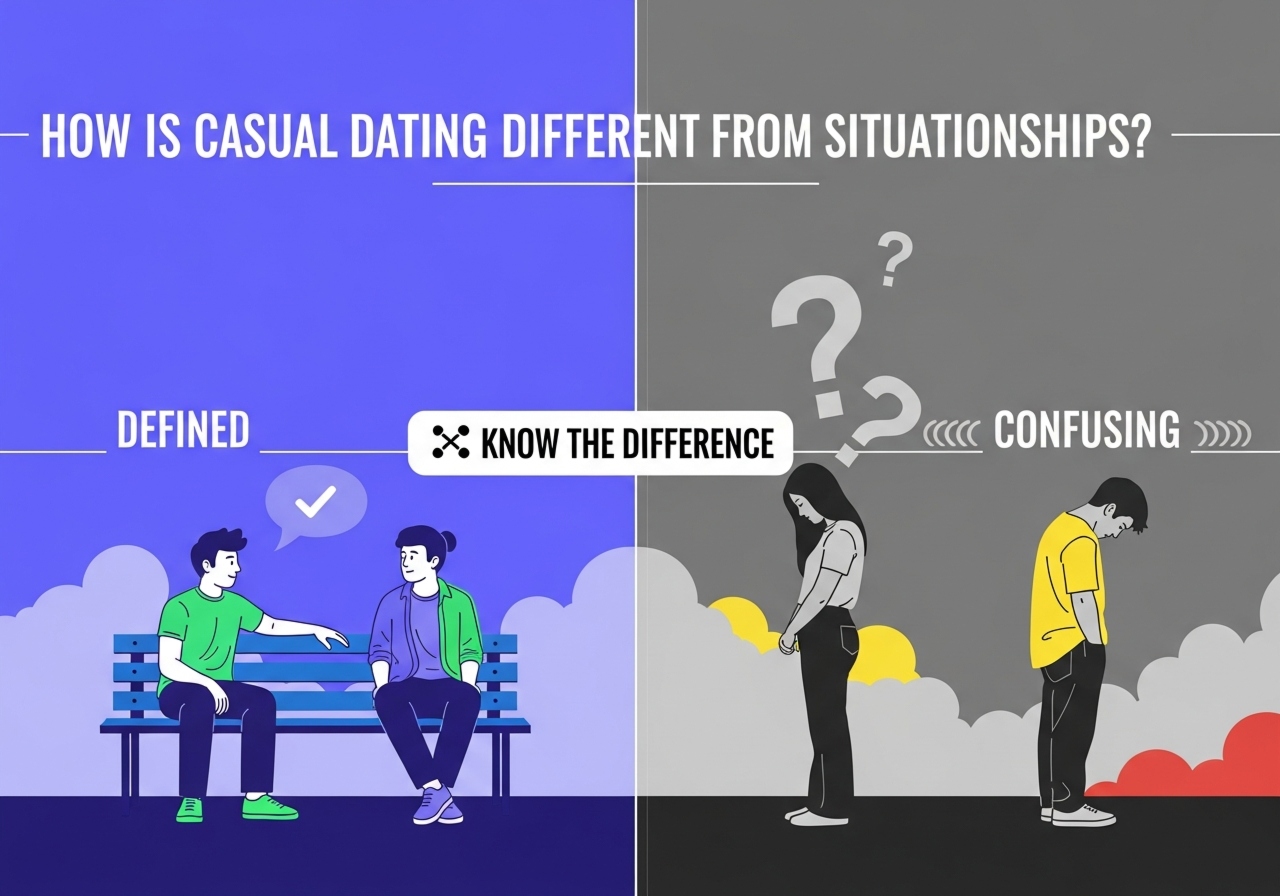
Have you ever wondered whether what you’re experiencing is casual dating or a situationship?

How Is Casual Dating Different From Situationships?
You’re about to get clear, practical guidance that helps you tell the difference, set boundaries, and communicate better with the person you’re seeing. This article breaks down both terms, compares them across key dimensions, and gives steps you can use to move forward in any direction you choose.
Why this distinction matters
Understanding the difference helps you manage expectations, protect your emotional wellbeing, and make intentional choices. When you can name what you’re in, you can act on what you want — whether that’s more clarity, more freedom, or an exit plan.
Definitions: What is casual dating?
Casual dating refers to going on dates or spending time with someone without a serious commitment or long-term expectations. You typically have multiple potential partners or remain open to other possibilities, and you often discuss (explicitly or implicitly) the low-pressure nature of the interaction.
Typical features of casual dating
Casual dating usually involves planned dates, flirtation, and sexual or romantic interest without a promise of exclusivity or a future. You and the other person often coordinate schedules, pursue shared interests, and enjoy companionship while maintaining autonomy.
Definitions: What is a situationship?
A situationship is a relationship that looks and sometimes feels like a committed relationship but lacks clear labels, agreed-upon expectations, and consistent communication about the future. It often evolves without deliberate agreement, leading to ambiguity about where you both stand.
Typical features of situationships
Situationships often include sexual intimacy, emotional closeness, and routine interactions without explicit commitment. The pattern usually develops when two people behave like partners in many ways but avoid or postpone defining the relationship.
Quick comparison table
This table gives you a snapshot of how casual dating and situationships typically differ along common relationship dimensions.
| Dimension | Casual Dating | Situationship |
|---|---|---|
| Expectations | Low to moderate, usually agreed or implied | Vague, often unspoken |
| Exclusivity | Often non-exclusive or discussed openly | Often ambiguous; may be exclusive by behavior but not declared |
| Communication | Generally transparent about casual nature | Often inconsistent; important topics avoided |
| Emotional involvement | Can vary; typically limited by design | Can intensify over time without clarity |
| Structure | Dates and planned hangouts | Routine interactions, sometimes more fluid |
| Potential for commitment | Possible but usually requires explicit conversation | Exists but is unclear; may be stalled by fear or avoidance |
| Boundary clarity | More explicit, intentional boundaries common | Boundaries often blurred or undefined |
How expectations differ
When you casual date, you usually have a shared understanding that things are relaxed and noncommittal. In a situationship, you might have routines or deepening feelings, but you lack a clear agreement about what those behaviors mean for the future.
How unclear expectations affect you
Unclear expectations can create anxiety, jealousy, and confusion about priorities. You might find yourself overthinking small details, feeling hurt when plans fall through, or wondering whether your feelings are being reciprocated.
Commitment and exclusivity
In casual dating, exclusivity is a conversation you can have and negotiate — many casual daters explicitly decide to remain non-exclusive. In situationships, exclusivity is often implied by behavior (frequent contact, emotional support) but not formally agreed on.
Why exclusivity matters
Exclusivity affects emotional safety, time investment, and future planning. If you want exclusivity, it’s important to ask for it; if you prefer non-exclusivity, you should be clear so that both of you can make informed choices.
Communication patterns
Casual dating often includes more direct conversations about the casual nature of the relationship, either at the start or periodically. Situationships tend to suffer from avoidance, with important topics like future plans, exclusivity, or feelings postponed or skirted.
Improving your communication
When you speak up about your needs, you create space for honesty. Use “I” statements, ask direct questions, and set a time for a conversation so the other person knows it’s important to you.
Emotional involvement and attachment
With casual dating, you might be careful to protect your emotional energy and avoid intense attachment unless you both agree to deepen the relationship. In a situationship, emotional involvement can escalate without the protective clarity of a label, which can leave you vulnerable.
Managing your emotions
Check in with yourself regularly: what are your feelings, and how are they changing? If you notice increasing attachment, consider whether your current arrangement supports your wellbeing or whether you should renegotiate terms.
Boundaries and expectations
Casual dating tends to involve clearer boundaries that you or both of you have established to ensure the arrangement stays comfortable. Situationships often lack clear boundaries, which can lead to mismatched expectations and hurt.
How to set effective boundaries
Decide what you need to feel safe — time alone, emotional exclusivity, clarity on sexual health, or expectations around weekend plans — and communicate those needs early. Boundaries should be specific, actionable, and revisited as things change.
Time and frequency of contact
Casual relationships may include regular dates but can also be more sporadic, depending on availability and mutual interest. Situationships often develop a pattern of frequent contact that resembles a committed relationship but without the clarity that defines it.
What the rhythm tells you
If someone texts you every day, sleeps over regularly, or invites you to family events, take note: those behaviors suggest a level of investment that might require a conversation about intent. Patterns often speak louder than words.
Sexual dynamics and expectations
Sex can be part of both casual dating and situationships, but the emotional consequences may differ. In casual dating, sex is often framed as one aspect of a low-pressure arrangement, whereas in a situationship sex can intensify connection without clarity about where it’s heading.
Discussing sexual boundaries
You should discuss sexual health, consent, and what sex means for you emotionally. Be honest about whether sex is purely physical for you or whether it’s likely to increase emotional investment.
Long-term potential and trajectories
Casual dating can evolve into a committed relationship if both people want that and communicate clearly. Situationships may also evolve, but the lack of clarity makes it more likely that you’ll drift apart or experience prolonged uncertainty.
How to recognize potential
Look for alignment in life goals, consistent communication, mutual respect, and a willingness to discuss the future. If those elements are present, you can initiate a conversation to move the relationship to the next level.
Benefits of casual dating
Casual dating offers freedom, flexibility, and the chance to meet multiple people to learn what you value. It allows you to balance dating with other priorities like work, family, or personal growth without the pressure of a defined commitment.
When casual dating is a good fit
If you’re exploring what you want, recovering from a breakup, focusing on career goals, or simply not ready for commitment, casual dating can be a healthy, intentional choice. It gives you room to learn without high stakes.
Benefits of situationships
Situationships can provide companionship, emotional support, and intimacy without the explicit pressure of a formal relationship. For some people, the fluidity suits their current life stage or emotional needs.
When situationships can work for you
If you and the other person have aligned expectations and both prefer ambiguity for legitimate reasons (e.g., long-distance constraints, uncertain futures), the arrangement can function well. But success requires periodic check-ins and honest self-reflection.
Downsides of casual dating
Even when intentional, casual dating can leave you feeling disconnected, superficial, or emotionally unsatisfied if your desires shift. If one person wants more than the other, mismatched expectations can lead to hurt.
How to minimize harm
Be transparent, use safe sex practices, and check in about how you both feel. If your needs change, bring them up quickly so you’re not caught off guard.
Downsides of situationships
Situationships are often associated with confusion, jealousy, and prolonged uncertainty that can erode self-esteem. The biggest risk is investing emotionally without reciprocal commitment, leaving you stuck in limbo.
How to avoid getting stuck
Set time-limited expectations for ambiguity: for example, give yourself a deadline to renegotiate the relationship. If the other person avoids conversation repeatedly, that’s information you can act on.
Signs you’re in a casual dating situation
- You and the other person explicitly agreed to keep things casual.
- You both date other people or remain open to it.
- You feel relatively emotionally detached and can stop seeing them without major upset.
- Interactions are structured around dates or planned activities.
What to notice about your feelings
If you feel free and in control of your time, casual dating is serving you. If you start feeling unsettled or want more, that’s a signal to communicate your change in needs.
Signs you’re in a situationship
- You spend a lot of time together and behave like partners, but you have not labeled it.
- Important conversations (future plans, exclusivity) are avoided or postponed.
- You feel confused about boundaries or whether the other person considers you a priority.
- Emotional closeness increases but commitment language is absent.
What to do if these signs apply
If this resonates, ask for a direct conversation about where things are going. You deserve clarity; the other person may be relieved to talk about it too.
How to ask the right questions
When you decide to have the conversation, prepare open, non-accusatory questions that focus on mutual needs. Frame the talk around understanding and respect instead of blame.
Sample questions to use
- “How do you see what we’re doing right now?”
- “Are you seeing other people, and how do you feel about exclusivity?”
- “What are you looking for in the near future, and does that include a relationship with me?”
Conversation scripts that work
If you find direct conversations hard, try scripts that feel natural for you. Use “I” statements and be clear about your needs, while also inviting the other person’s perspective.
A simple script example
“I’ve been enjoying spending time with you and want to understand how you see this. For me, it’s important to know whether we’re on the same page about being casual or wanting something more. How do you feel?”

What to expect during the conversation
You may get a clear answer, partial clarity, or avoidance. Prepare for different outcomes: the other person might want the same thing you do, have different goals, or need time to think.
How to handle avoidance or stalling
If you get stalling or deflection, set a follow-up timeline: “I respect that you need time, but can we revisit this in a week?” If avoidance persists, treat that avoidance as important information about the other person’s readiness.
How to set limits and deadlines
Setting limits helps protect your emotional energy. Decide in advance what you’re willing to tolerate and for how long before reevaluating or moving on.
Examples of useful limits
- “Let’s see each other for three more weeks, then talk about what’s next.”
- “I’m not comfortable being exclusive without a conversation, so I need us to discuss that within the month.”
Transitioning from casual dating to a committed relationship
If you want to move from casual to committed, bring up your desire honestly and ask whether the other person sees a similar future. Look for consistent actions that align with commitment: introducing you to friends/family, future planning, and exclusive behavior.
Steps to encourage a healthy transition
- Communicate your desires clearly.
- Give the other person space to reflect.
- Watch for consistent changes in behavior, not just words.
- Negotiate new boundaries and expectations together.
Transitioning out of a situationship
If you want clarity or to exit, make your intentions known. If the other person can’t or won’t provide clarity, you can decide to step back or end things to preserve your wellbeing.
How to exit gracefully
Be honest, kind, and firm. You can say something like, “I care about you, but the lack of clarity is harming me. I need a relationship that aligns with my needs, so I’m going to step back.”
When to stay, when to leave
Stay if the arrangement meets your needs and you’re not compromising important values or future goals. Leave if ambiguity, repeated avoidance, or mismatched goals cause you emotional distress or prevent you from living the life you want.
Red flags that mean “leave”
- The other person consistently avoids serious conversations.
- You’re repeatedly left out of future plans or not introduced to their inner circle.
- Your mental health or self-esteem is declining because of the relationship.
How to protect your mental health
Prioritize self-care, set boundaries, and maintain friendships and interests outside the relationship. If confusion is consuming you, consider taking a break and seeking support from trusted friends or a therapist.
Small habits that help
- Keep a journal of your feelings and the relationship patterns you notice.
- Schedule regular time for friends and hobbies.
- Use clear language with the other person about your needs and limits.
What friends and family might see
Outsiders often notice patterns before you do: inconsistent availability, secrecy, or lack of clear commitment. If friends voice concern, listen and weigh their observations against your experience.
How to use outside perspectives
Use close friends as sounding boards, not decision-makers. Their perspectives can highlight blind spots, but your priorities ultimately guide your choices.
Sexual health and practical considerations
Regardless of label, discuss sexual health practices, contraception, and boundaries. Shared honesty about STI testing and condom use is part of respecting each other’s wellbeing.
Practical steps to take
- Get tested regularly and share results if you’re comfortable.
- Agree on contraception methods and backup plans.
- Discuss how you’ll handle future sexual health updates.
Financial and logistical factors
Casual dating often involves splitting costs or paying per date, while situationships may include shared expenses or more frequent in-home time. Be clear about financial expectations to avoid resentment.
Questions to clarify logistics
Ask who pays for dates, how you’ll manage shared items or time together, and whether either of you expects anything financial in return for emotional investment.
Cultural and generational influences
Generational and cultural norms influence how people approach dating and ambiguity. You might be more comfortable with explicit labels because of cultural values, or less interested in labels because of personal or generational factors.
How to navigate cultural differences
Have open conversations about expectations rooted in background and upbringing. Acknowledging differences helps reduce misunderstandings and builds respect.
When professional help can help
If patterns of situationships recur and cause distress, therapy or coaching can provide tools to build clarity, set boundaries, and heal attachment wounds. A professional can help you identify repeating patterns and support behavior changes.
How therapy supports you
Therapists can help you understand attachment styles, communication strategies, and emotional regulation so you can form healthier relationships.
Real-life scenarios and what to do
Scenario 1: You’re sleeping over often but haven’t discussed exclusivity. Action: Ask a direct question about whether you’re both seeing other people and how they view the arrangement.
Scenario 2: You find yourself jealous when they go out with others. Action: Acknowledge your feelings and ask whether their behavior aligns with what you want in terms of exclusivity.
Scenario 3: They avoid meeting your friends but want intimate time alone. Action: Ask why introductions are avoided and whether they see you as long-term material.
Applying the scenarios to your life
Use these prompts to guide conversations and make decisions. Your emotional response offers reliable data about whether the relationship fits your needs.
Sample conversation templates
Template for clarity: “I enjoy spending time with you and want to be honest about my feelings. I’m wondering what you’re looking for and whether we share the same expectations.”
Template for asking exclusivity: “I’m feeling more invested and want to ask whether you’re seeing other people. I’d like to know if exclusivity is something you’d consider.”
Using templates without sounding scripted
Adapt the templates to your natural voice and add personal detail. The goal is authenticity and clarity, not perfection.
Frequently asked questions
Q: Can situationships turn into healthy relationships?
A: Yes, but it requires honest conversations, aligned goals, and changes in behavior from both people.
Q: Is casual dating ever hurtful?
A: It can be if one person wants more while the other remains committed to staying casual. Clear communication helps prevent harm.
Q: How long is too long to stay ambiguous?
A: There’s no fixed rule, but if ambiguity causes ongoing distress for you, it’s too long. Give yourself a timeline for clarity and act accordingly.
What if the other person reacts badly?
If they react defensively, stay calm and restate your needs. If they refuse to engage constructively, that’s information about compatibility and willingness to grow.
Summary and actionable takeaways
- Name the arrangement: you gain power by labeling what you’re in.
- Communicate clearly: ask direct questions about exclusivity, expectations, and emotional needs.
- Set boundaries and deadlines: protect your time and emotional wellbeing.
- Watch behavior, not just words: consistent actions reveal true intent.
- Take care of yourself: prioritize friendships, therapy, and activities that support your sense of self.
A brief checklist to use now
- Reflect: What do you want from this connection?
- Ask: Schedule a conversation and ask direct questions.
- Observe: Note whether words and actions align.
- Decide: Stay, renegotiate, or leave based on how the conversation goes.
Final thoughts
You deserve relationships that match your values, goals, and emotional needs. Whether you prefer casual dating, want a committed partnership, or choose to step away from ambiguity, being intentional gives you agency and dignity. Trust your instincts, communicate openly, and choose the path that helps you thrive.