Curious about what kinds of services gay dating platforms offer and which ones might fit your needs?
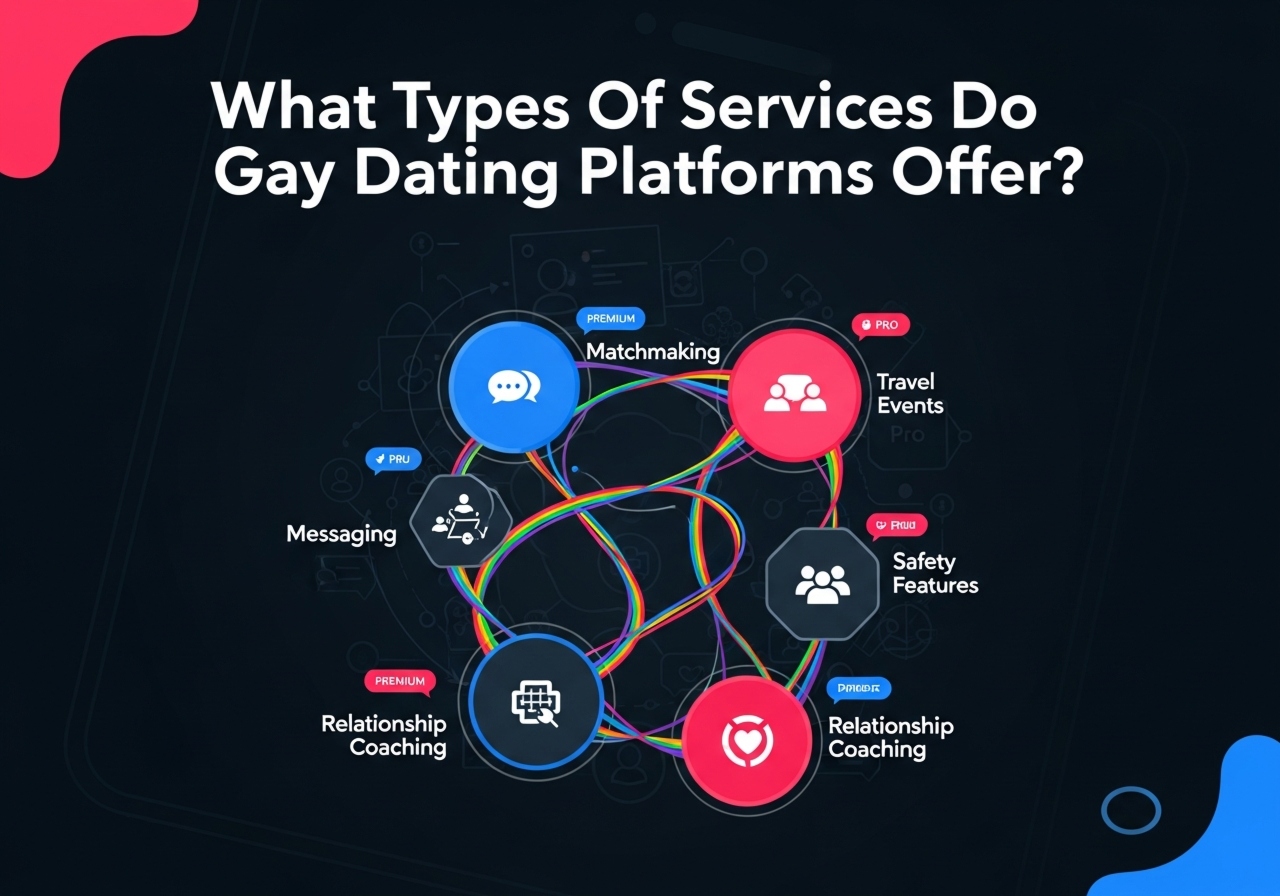
What Types Of Services Do Gay Dating Platforms Offer?
Dating platforms aimed at gay, bisexual, queer, and other men who have sex with men (MSM) provide a wide spectrum of services beyond simple profile listings. You’ll find features designed to help you meet people for casual connections, long-term relationships, friendship, community support, health resources, and real-world events. This article breaks down those services so you can decide which platform features matter most to you.
Types of Platforms: Apps, Websites, and Niche Communities
Gay dating services come in several formats: mobile apps, desktop websites, and community-based platforms that blend social networking with dating. Each format prioritizes different user experiences — apps focus on immediacy and location-based discovery, while websites may provide deeper profiles and longer-form content. Niche communities often serve particular subcultures, age groups, relationship styles, or geographic regions.
Hookup Apps vs Relationship-Focused Platforms
Some platforms emphasize casual, immediate connections and short-term encounters, while others prioritize relationships, compatibility, and long-term matchmaking. You’ll often see features that reflect these goals: hookup apps emphasize quick discovery tools and location-based matching, whereas relationship platforms provide personality tests and guided onboarding to surface more compatible matches. Knowing your goals will help you choose a platform aligned with what you want.
Niche and Subculture Platforms
Beyond general apps, many services cater to specific identities, body types, fetishes, age ranges, or cultural backgrounds. These niche platforms give you tailored filters, community norms, and event lists that make it easier to find people who share very specific interests. If you identify with a subculture or have particular preferences, a niche platform can save time and increase matching accuracy.
Core Profile Features: What You’ll Use to Present Yourself
Your profile is the first impression on most platforms, and gay dating services offer many ways to present who you are. Profiles typically include photos, a short bio, preferences, and lifestyle details. You’ll also find options to add pronouns, sexual orientation, relationship goals, and basic health information if you choose.
Profiles may let you:
- Upload multiple photos and cover images.
- Fill out interest tags, hobbies, and music tastes.
- Connect social feeds like Instagram or Spotify.
- Add lifestyle preferences such as smoking, drinking, or exercise habits.
Table: Common Profile Elements and Why They Matter
| Profile Element | What it Shows | Why it’s Useful to You |
|---|---|---|
| Photos & Albums | Visual first impression | Helps attract people who connect visually |
| Short Bio | Personality snapshot | Lets you highlight what you want (funny, serious, relationship) |
| Pronouns & Identity | Gender and orientation clarity | Signals inclusivity and avoids misgendering |
| Relationship Goals | Dating, hookups, friends, etc. | Aligns expectations from the start |
| Lifestyle & Habits | Smoking, drinking, fitness | Helps compatibility filtering |
| Interests & Music | Hobbies and favorite artists | Conversation starters and cultural fit |
| Social Links | Instagram, Spotify, etc. | Adds authenticity and context |
Communication Tools: How You’ll Talk to Matches
Messaging is core to any dating platform, but services vary widely in how you communicate. Expect in-app text chat as a given, but many platforms also offer voice notes, audio and video calls, and ephemeral messages. Some support group chats, community threads, or live streaming for larger social interaction.
Common communication features include:
- One-on-one messaging with read receipts and typing indicators.
- Voice messages and audio notes for more natural conversation.
- Video calling for face-to-face interaction before meeting.
- Ephemeral messages that disappear after viewed for privacy.
- Group chats or interest-based channels for community engagement.
Table: Communication Features and Typical Use Cases
| Feature | Use Case | Benefits for You |
|---|---|---|
| Text Chat | Initial contact & planning | Low-pressure, asynchronous conversation |
| Voice Notes | Convey tone quickly | Feels more personal than text |
| Video Calls | Virtual dates & safety checks | Confirms identity and chemistry |
| Ephemeral Messages | Sensitive sharing | Privacy-conscious communication |
| Group Chats | Meet multiple people | Social pressure-free interaction |
Matching Algorithms and Discovery
How platforms present people to you varies: swipe-based discovery, algorithmically-ranked matches, or curated lists based on compatibility. Algorithms can be simplistic (location + age) or sophisticated (behavioral data, personality tests, machine learning). You’ll generally experience one of the following approaches:
- Swipe / quick choice: Fast and based on photos and brief profiles.
- Algorithmic ranking: Uses preferences, past interactions, and inferred interests.
- Questionnaire-based matches: Uses personality tests and compatibility scores.
- Manual search: You use filters to find people directly by criteria.
These systems impact how many matches you see and how relevant they are. If you prefer serendipity, swipe apps may suit you; if you want compatibility, seek platforms that use in-depth matching.
Search, Filters, and Advanced Discovery
Search and filtering let you narrow results by attributes such as age, distance, body type, ethnicity, group (e.g., twink, bear), HIV/PrEP status, relationship intention, and more. Advanced platforms provide multiple simultaneous filters and saveable searches so you can refine results quickly. Filters are especially helpful on large platforms where raw volume can overwhelm you.
Examples of common filters:
- Distance radius and last active time.
- Body type, height, and ethnicity.
- Relationship status, openness to dating, or hookup intentions.
- Health indicators like HIV status, testing frequency, or PrEP usage.
Safety, Verification, and Moderation Services
Safety features are critical and come in many forms. Platforms invest in photo verification, ID checks, anti-scam systems, and human moderation to reduce abuse and fake profiles. You’ll also find easy-to-use reporting and blocking tools, and some platforms have teams dedicated to responding to safety incidents.
Key safety services typically include:
- Photo verification badges after real-time selfie checks.
- Manual or automated profile review systems.
- Reporting and blocking options with rapid response workflows.
- Safety tips in the onboarding process to encourage best practices.
Table: Safety Tools and How They Help You
| Tool | What It Does | Benefit to You |
|---|---|---|
| Photo Verification | Confirms photos match a live selfie | Lowers risk of catfishing |
| Manual Moderation | Human review of flagged content | Better judgment on nuanced cases |
| Automated Filters | Flags spam/scam patterns | Reduces spam messages |
| Reporting Workflow | Submit reported accounts easily | Empowers you to act quickly |
| Block / Mute | Stop contact from someone | Immediate protection and peace of mind |
Privacy Controls and Data Security
Your privacy matters and you’ll find a range of privacy controls across platforms. Options often include hiding your profile from public searches, using an incognito or invisible mode, hiding last active time, and controlling who sees certain photos. Payment and personal data are expected to be encrypted and handled according to privacy laws like GDPR for applicable users.
Typical privacy services include:
- Incognito or private browsing which hides you from discovery.
- Photo albums with selective visibility.
- Two-factor authentication (2FA) for account security.
- Options to export or delete your data, per legal rights in many regions.
Paid Services and Premium Subscriptions
Most dating platforms are freemium: basic functionality is free while premium tiers unlock advanced features. You’ll often see monthly subscriptions, lifetime upgrades, pay-per-feature purchases, and virtual currencies for tipping or gifting. Premium features typically accelerate visibility, expand filters, or remove ads.
Common premium features:
- See who liked or viewed your profile.
- Advanced filters and unlimited likes.
- Profile boosts or spotlight placement.
- Read receipts and messaging to new users.
- Ad-free experience and enhanced customer support.
Table: Typical Subscription Tiers and Features
| Tier | Typical Price Model | Typical Perks |
|---|---|---|
| Free | No cost | Basic messaging, profile creation, limited likes |
| Premium / Plus | Monthly subscription | Advanced filters, see likes, ad-free |
| Boosts / Credits | Pay-as-you-go | Temporary visibility boosts |
| VIP / Concierge | Higher monthly or custom | Personal matchmaking, event invites |
| Lifetime | One-time fee | Permanent premium access (rare) |
Community Features and Social Tools
Many platforms are expanding beyond one-on-one dating into community spaces. You’ll find forums, group chats, interest-based communities, and in-app events. Community features help you make friends, network, and meet people in low-pressure ways. This is particularly helpful if you’re new to an area or looking to build a social circle alongside dating.
Community features commonly include:
- Topic-based groups and message boards.
- Event calendars for local meetups and PRIDE events.
- Live streams, Q&A sessions, or virtual parties.
- Volunteer or community outreach integration.
Events, Meetups, and Real-World Integration
Platforms frequently organize or promote real-world events to help members meet safely and naturally. You’ll see mixers, theme nights, speed dating, and travel meetups through partnerships or in-house planning. Some premium services include concierge event invites that match you to curated social settings.
What you’ll typically find:
- Local event listings and RSVP tools.
- Ticket purchases and guest lists accessible in-app.
- Meet-and-greet sessions hosted by the platform.
- Travel mode features that let you set a temporary location while traveling.
Health, Testing, and Wellbeing Services
Health-related features have become more common: reminders for STI testing, in-app disclosure of HIV or PrEP status, links to local clinics, and partnerships with telehealth providers. These features promote safer sex practices and make responsible disclosure easier.
Examples of health and wellbeing services:
- Optional health badges (e.g., “HIV-negative,” “on PrEP”) with privacy controls.
- Testing locator tools and reminders.
- Educational content about safer sex and mental health.
- Direct links to counseling or telemedicine partners.
Matchmaking, Coaching, and Concierge Services
If you want something more guided, some platforms offer personal matchmaking, coaching, or concierge services. These are often paid and include personalized profile writing, curated introductions, photo shoots, or a human matchmaker who manages your search for you. If you’re busy or unfamiliar with modern dating apps, these services can save time and increase success.
Typical offerings:
- Personalized coaching on profile photos and messaging.
- Human-led matching with curated introductions.
- VIP event access and safety escorts in some markets.
- Date planning and logistics assistance.

Anti-Scam, Fraud Detection, and AI Tools
Platforms implement AI and rule-based systems to identify scams, fake profiles, and bots. These systems analyze behavior, message patterns, and account metadata to flag suspicious activity. You’ll typically see automated detection plus human review, and ongoing machine learning improvements.
What AI systems do:
- Detect bulk messaging and repetitive text indicating spam.
- Flag accounts that change information rapidly.
- Identify likely fake photos using forensic techniques.
- Prioritize suspected fraud for human moderators to review.
Photo and Identity Verification
Many gay dating services let you verify your identity to signal authenticity. Verification may be as simple as a selfie match, or as involved as submitting ID documents for manual review. Verified accounts often display a badge that helps you trust matches more quickly.
Verification options vary:
- Quick selfie match against uploaded photos.
- Video verification where you perform a prompted gesture.
- Government ID verification for higher-assurance platforms.
- Optional or mandatory depending on platform policy.
Inclusivity, Accessibility, and Language Options
Good platforms are inclusive of trans and non-binary users and offer options for pronouns, gender identity, and relationship structures. Accessibility features like screen-reader compatibility, adjustable font sizes, or simplified user interfaces make platforms usable for more people. Multiple language options broaden usability across global audiences.
Typical inclusivity features:
- Multiple gender identity options beyond a binary.
- Pronoun fields and customizable orientation labels.
- Accessibility settings and translated interfaces.
Privacy, Legal Compliance, and Data Handling
Respect for your data is essential and platforms should clearly state how they collect, use, and share your information. You’ll want to find services that comply with GDPR, CCPA, or local privacy laws and provide clear options to delete or export your data. Payment processing is usually handled by secure third-party providers with PCI compliance.
Questions to ask about privacy:
- Can you delete your account and associated data permanently?
- Is there clear disclosure on third-party data sharing?
- Are payments and personally identifiable information encrypted?
Payment, Refunds, and Billing Transparency
Paid features should have clear pricing and cancellation policies. Some services auto-renew monthly subscriptions, so you’ll want to be aware of billing cycles and refund rules. Reliable platforms provide easy in-app purchase management, receipts, and customer support for billing disputes.
Common payment practices:
- Monthly, quarterly, or yearly subscription options.
- One-time boosts and in-app purchase credits.
- Clear cancellation flows in app settings.
Integrations with Social Media and Music Services
Platforms often let you link external accounts like Instagram or Spotify to enrich profiles and provide conversational hooks. These integrations can show you shared music tastes or mutual followers, helping you connect faster. You’ll want to control how much of your external profiles are displayed publicly.
Typical integrations:
- Spotify to show your favorite artists.
- Instagram for a richer visual context.
- Apple/Google sign-in for quick account creation.
Regional Differences and Cultural Considerations
Services and norms differ by region. In some countries, legal and safety constraints shape what features are available, and cultural norms influence how people use platforms. You’ll want to choose a service with an active local user base to avoid frustration with low match volume or misaligned social expectations.
Consider regional features like:
- Geo-specific events and safety partnerships.
- Local language support and moderation teams.
- Legal compliance with local data and identity laws.
How to Choose the Right Platform for You
Picking the right platform starts with clarifying your goals. Are you looking for casual hookups, serious relationships, friends, or community? Check the platform’s primary audience, features, safety record, and pricing. Try free versions first to gauge the user base and the app’s vibe before committing to a paid tier.
Checklist for choosing:
- Match platform goals to your dating goals.
- Verify local user activity and demographic fit.
- Test communication and privacy controls.
- Review safety measures and verification processes.
- Compare pricing and subscription terms.
What to Expect When You Sign Up
When you create an account, expect onboarding that asks about basics like sexual orientation, pronouns, and relationship goals. Many platforms will prompt you to upload photos and complete a bio. Some may offer guided prompts or personality quizzes to help the algorithm match you more accurately.
Typical onboarding steps:
- Basic profile setup (name, age, photos).
- Optional identity and health disclosures.
- Verification steps if available.
- Matching preferences and filters.
Best Practices for Safety and Success
Be cautious about sharing personal data early, meet in public places, and let a friend know when you’re meeting someone new. Use platform verification and report suspicious behavior. Communicate clearly about intentions to align expectations and reduce misunderstandings.
Practical safety tips:
- Use in-app messaging before sharing a phone number.
- Schedule a public first meeting; check-in with a friend.
- Trust your instincts and block/report suspicious users.
Frequently Asked Questions
Q: Are health badges required on profiles? A: Usually not — most platforms make health status disclosures optional, though some platforms encourage them and provide privacy controls.
Q: Can you use the same account across devices? A: Yes, most services sync across mobile and web versions; use secure passwords and consider 2FA.
Q: Do platforms check legal age? A: Reputable platforms require you to be of legal age and often implement checks like ID verification or age gates during onboarding.
Final Thoughts
Gay dating platforms now offer a broad ecosystem of services that cover discovery, communication, safety, health, community, and real-world connection. You’ll find options from simple, photo-based apps to deep, curated matchmaking and concierge services. By identifying your priorities — safety, relationship type, community, or convenience — you can pick a platform that supports your dating journey while keeping you informed and protected.
If you want, tell me what you’re looking for (casual dating vs long-term relationship, preferred features, region) and I can suggest the kinds of platforms or specific services that usually fit those needs.